



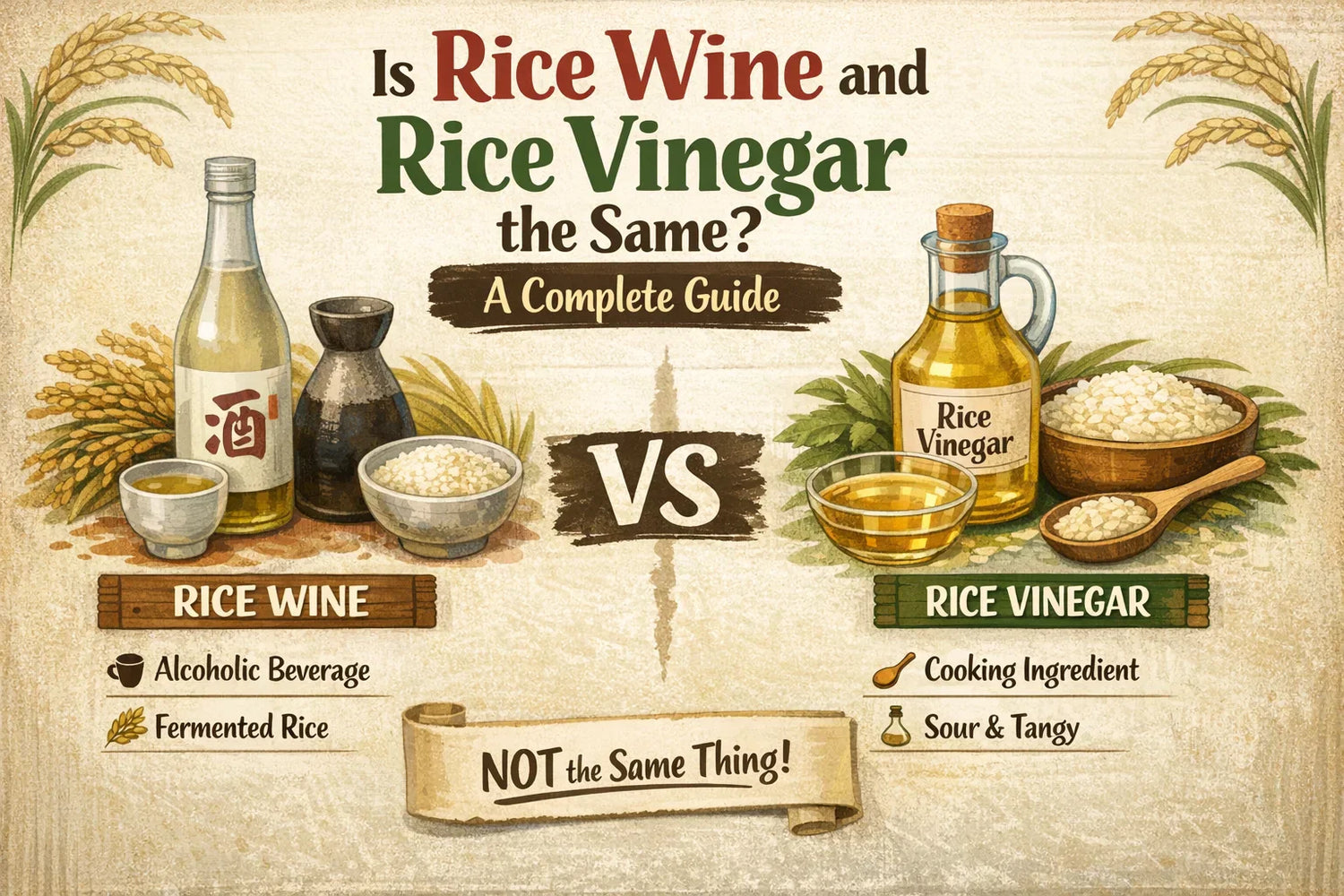
Rice wine and rice vinegar are two ingredients that often appear in Asian cuisine, and many people assume they are the same because both are made from fermented rice. However, rice wine and rice vinegar are not the same. They differ in taste, preparation method, alcohol content, and how they are used in cooking.
If you’ve ever followed a recipe for sushi rice, stir-fried dishes, or marinades, you might have noticed that some recipes call for rice wine while others require rice vinegar. Understanding the difference between the two can help you cook better Asian dishes and avoid mistakes in the kitchen.
In this guide, we’ll explore what rice wine and rice vinegar are, how they are made, their differences, and when to use each one.
What Is Rice Wine?
Rice wine is an alcoholic beverage made from fermented rice. It is commonly used in East Asian cooking and is also consumed as a drink in many cultures.
Unlike grape wine, which is made from fermented fruit sugars, rice wine is produced by converting the starch in rice into sugars and then fermenting them into alcohol.
How Rice Wine Is Made
The process of making rice wine typically involves several steps:
-
Steaming the Rice
The rice is cooked or steamed to soften it and prepare it for fermentation. -
Adding Fermentation Culture
A fermentation starter (yeast or mold) is added to convert starch into sugar. -
Fermentation
The sugars are fermented by yeast to produce alcohol. -
Aging or Filtering
The wine may be aged or filtered before being used or consumed.
Common Types of Rice Wine
Different countries have their own versions of rice wine:
- Chinese Shaoxing wine – widely used in Chinese cooking
- Japanese sake – often consumed as a beverage but also used in cooking
- Korean makgeolli – a milky, lightly sparkling rice wine
- Mirin – a sweet Japanese rice wine used in sauces
Taste and Characteristics
Rice wine generally has:
- Mild sweetness
- Slightly nutty flavor
- Alcohol content (usually 12–20%)
- A rich umami taste that enhances savory dishes
How Rice Wine Is Used in Cooking
Rice wine is commonly used to:
- Marinate meats
- Add flavor to stir-fries
- Enhance sauces and broths
- Remove fishy smells from seafood
It adds depth and complexity to dishes and is a key ingredient in many Chinese and Japanese recipes.
What Is Rice Vinegar?
Rice vinegar is a vinegar made from fermented rice wine or rice itself. During the fermentation process, alcohol is converted into acetic acid, giving vinegar its characteristic sour taste.
Rice vinegar is widely used in Asian cuisines, especially Japanese, Chinese, and Korean cooking.
How Rice Vinegar Is Made
Rice vinegar production involves two fermentation steps:
-
Rice Fermentation
Rice is fermented into alcohol, similar to rice wine. -
Acetic Acid Fermentation
Bacteria convert the alcohol into acetic acid, producing vinegar.
This extra fermentation stage is what transforms rice wine into vinegar.
Types of Rice Vinegar
There are several types of rice vinegar, including:
White Rice Vinegar
- Mild and slightly sweet
- Common in Chinese cooking
Japanese Rice Vinegar
- Very mild and delicate
- Used for sushi rice
Black Rice Vinegar
- Dark color and smoky flavor
- Popular in Chinese sauces and dipping sauces
Seasoned Rice Vinegar
- Contains sugar and salt
- Frequently used for sushi preparation
Taste and Characteristics
Rice vinegar has:
- Mild acidity
- Slight sweetness
- Lower acidity compared to Western vinegars
- No alcohol
Because it is less harsh than regular vinegar, it works well in delicate dishes.
How Rice Vinegar Is Used in Cooking
Rice vinegar is often used for:
- Sushi rice seasoning
- Salad dressings
- Pickling vegetables
- Dipping sauces
- Marinades
It adds brightness and balance to dishes without overpowering them.
Key Differences Between Rice Wine and Rice Vinegar
Although both are made from fermented rice, their properties and culinary uses are quite different.
1. Fermentation Process
Rice wine undergoes one fermentation stage that produces alcohol.
Rice vinegar undergoes two fermentation stages—first producing alcohol and then converting that alcohol into acetic acid.
2. Alcohol Content
Rice wine contains alcohol, typically around 12–20%.
Rice vinegar contains no alcohol because the alcohol is converted into acid during fermentation.
3. Taste
Rice wine has a mild, slightly sweet flavor with umami depth.
Rice vinegar tastes sour and tangy with light sweetness.
4. Culinary Purpose
Rice wine is mainly used for cooking and flavor enhancement, especially in stir-fries and marinades.
Rice vinegar is used for acidity and balance in dishes like sushi rice, pickles, and dressings.
5. Appearance
Rice wine usually looks clear or pale yellow.
Rice vinegar ranges from clear to dark brown, depending on the variety.
Can Rice Wine and Rice Vinegar Be Substituted?
Many people wonder if rice wine and rice vinegar can replace each other in recipes.
The short answer is no, they are not direct substitutes, but sometimes you can adjust ingredients to make a workable replacement.
Substituting Rice Wine
If a recipe calls for rice wine and you don’t have it, you can try:
- Dry sherry
- Cooking wine
- Sake
- White wine
These options mimic the mild sweetness and alcohol content of rice wine.
Substituting Rice Vinegar
If you need rice vinegar, alternatives include:
- Apple cider vinegar (mild option)
- White wine vinegar
- Lemon juice (for acidity)
However, rice vinegar is milder than most Western vinegars, so you may need to dilute substitutes slightly.
Popular Dishes That Use Rice Wine
Rice wine is essential in many classic Asian dishes. Some popular examples include:
- Chinese stir-fried noodles
- Teriyaki sauce
- Kung Pao chicken
- Sweet and sour dishes
- Steamed fish recipes
It helps tenderize meat and adds complex flavor to sauces.
Popular Dishes That Use Rice Vinegar
Rice vinegar is equally important in Asian cooking.
Common dishes that use it include:
- Sushi rice
- Pickled vegetables
- Asian cucumber salad
- Dumpling dipping sauces
- Sweet and sour sauces
Its mild acidity makes it perfect for balancing flavors.
Nutritional Differences
Rice wine and rice vinegar also differ nutritionally.
Rice Wine
- Contains calories from alcohol
- May have small amounts of carbohydrates
- Provides flavor but limited nutrients
Rice Vinegar
- Very low in calories
- Contains acetic acid
- May help digestion and blood sugar control
Because rice vinegar is low in calories, it is often used in healthy dressings and light dishes.
Storage and Shelf Life
Proper storage can help maintain the quality of both ingredients.
Rice Wine Storage
Rice wine should be stored:
- In a cool, dark place
- Refrigerated after opening
- Tightly sealed
It typically lasts several months to a year once opened.
Rice Vinegar Storage
Rice vinegar is more stable.
It can be stored:
- At room temperature
- In a sealed bottle
- Away from direct sunlight
It can last for years without spoiling.
Why People Confuse Rice Wine and Rice Vinegar
The confusion between these two ingredients happens for several reasons:
- Both are made from fermented rice
- Both are commonly used in Asian cooking
- Their names sound similar
- They are often sold in the same grocery section
However, once you understand their differences in flavor and purpose, it becomes easy to choose the correct one for a recipe.
Final Thoughts
So, is rice wine and rice vinegar the same? The answer is no.
Although both ingredients come from fermented rice, they serve completely different purposes in cooking.
- Rice wine is an alcoholic ingredient used to add depth and umami to dishes.
- Rice vinegar is a tangy acid used to brighten flavors and balance recipes.
Using the right ingredient is important for achieving the authentic taste of many Asian dishes. Substituting one for the other can significantly change the flavor of your meal.
Next time you’re preparing sushi, stir-fried noodles, or a marinade, make sure you choose the correct ingredient. Understanding the difference between rice wine and rice vinegar will help you cook more confidently and achieve better results in the kitchen.
FAQs
1. Is rice wine the same as rice vinegar?
No, rice wine is alcoholic while rice vinegar is acidic and alcohol-free.
2. Can I replace rice wine with rice vinegar?
Not directly, because their flavors are very different.
3. What does rice wine taste like?
Rice wine has a mild sweetness with a slightly nutty and umami flavor.
4. What does rice vinegar taste like?
Rice vinegar tastes mildly sour with a subtle sweetness.
5. Is rice vinegar healthy?
Rice vinegar is low in calories and may support digestion and blood sugar control.
6. Is rice wine used for drinking?
Yes, certain types such as sake are commonly consumed as beverages.
7. What is rice vinegar mainly used for?
It is widely used in sushi rice, dressings, and pickled vegetables.
8. Does rice vinegar contain alcohol?
No, the alcohol is converted into acetic acid during fermentation.
9. Can I substitute apple cider vinegar for rice vinegar?
Yes, apple cider vinegar is a common substitute, though the taste may differ slightly.
10. Why is rice wine used in cooking?
Rice wine adds aroma, flavor depth, and helps remove unwanted odors from ingredients like seafood.



Leave a comment
This site is protected by hCaptcha and the hCaptcha Privacy Policy and Terms of Service apply.