



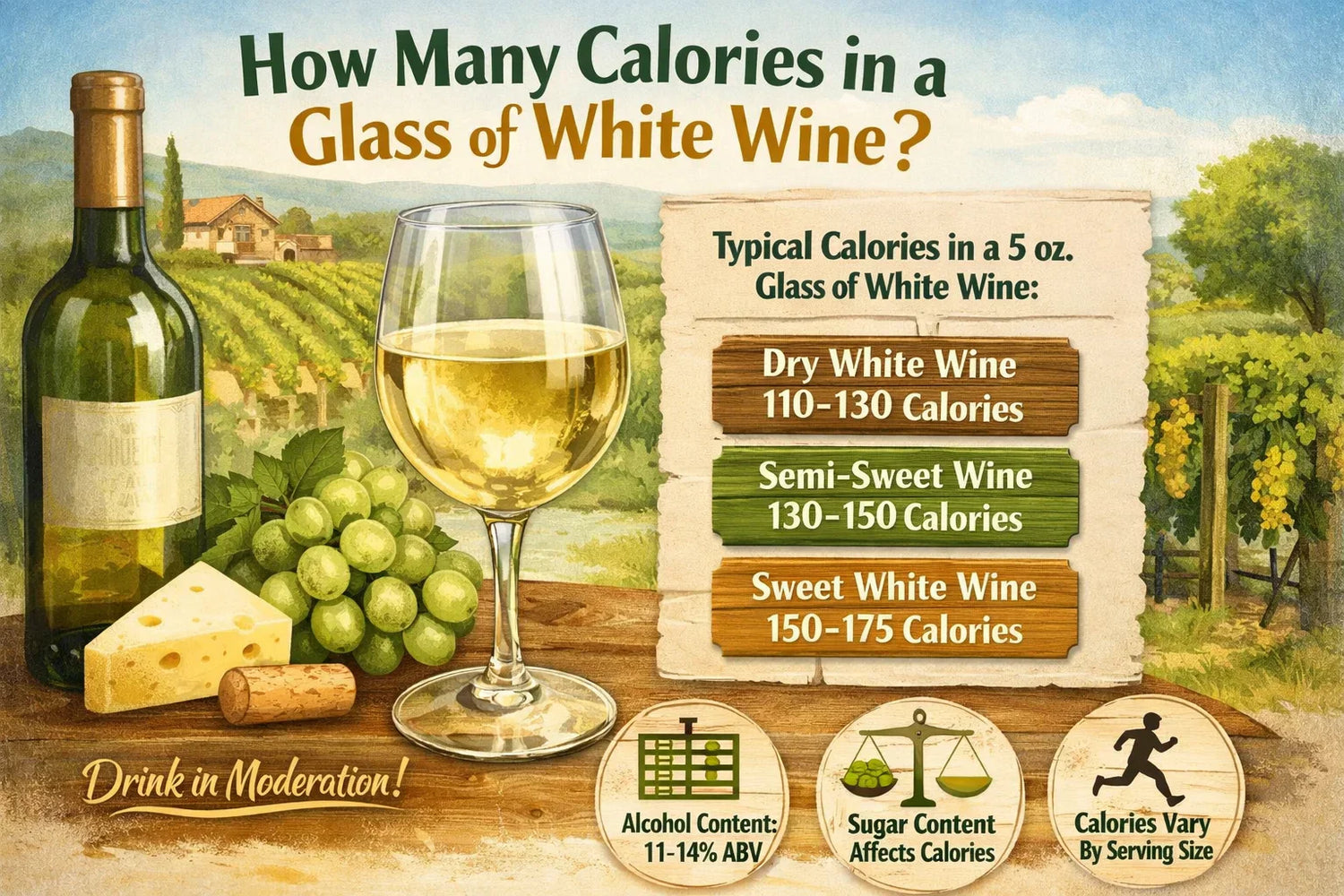
White wine is one of the most popular alcoholic beverages around the world. Whether you’re enjoying a chilled glass of Sauvignon Blanc on a warm evening or pairing Chardonnay with dinner, white wine is often considered a lighter and refreshing drink. But if you’re watching your calorie intake, you might be wondering: how many calories are in a glass of white wine?
The calorie count in white wine depends on several factors such as serving size, alcohol content, and sweetness level. In this guide, we’ll break down everything you need to know about white wine calories, including how many calories are in a standard glass, how different wine types compare, and tips for enjoying wine without consuming too many extra calories.
Average Calories in a Glass of White Wine
A standard serving of wine is 150 ml (5 ounces). This is the portion size typically used in nutrition guidelines.
On average:
- Calories in a 150 ml glass of white wine: 110–120 calories
- Calories in a 100 ml serving: 70–80 calories
- Calories in a 250 ml large glass: 180–200 calories
This means if you drink two glasses of white wine, you may consume around 220–240 calories.
Many people pour larger glasses at home, which can significantly increase calorie intake without realizing it.
Why White Wine Contains Calories
The calories in white wine mainly come from alcohol and sugar.
1. Alcohol Content
Alcohol contributes the majority of calories in wine.
- 1 gram of alcohol = 7 calories
White wines typically contain 11% to 14% alcohol by volume (ABV). The higher the alcohol content, the higher the calorie count.
For example:
- Wine with 11% ABV will usually contain fewer calories
- Wine with 14% ABV will contain more calories
2. Residual Sugar
The second contributor to calories is residual sugar left after fermentation.
Dry wines have very little sugar, while sweeter wines contain more.
Examples:
- Dry white wine: Lower sugar and fewer calories
- Sweet white wine: Higher sugar and more calories
Because of this, wines like Moscato or dessert wines usually contain more calories than dry varieties like Sauvignon Blanc.
Calories in Different Types of White Wine
Different white wine varieties have slightly different calorie counts.
Here is a comparison of some popular white wines.
| Type of White Wine | Calories per 150 ml Glass |
|---|---|
| Chardonnay | 120 |
| Sauvignon Blanc | 119 |
| Pinot Grigio | 115 |
| Riesling (dry) | 118 |
| Moscato | 125–130 |
As you can see, most white wines contain around 110–125 calories per glass.
The variation usually depends on alcohol level and sweetness.
Calories in a Large Glass of White Wine
In many restaurants and bars, wine glasses are larger than the standard serving size.
For example:
| Serving Size | Calories |
|---|---|
| 100 ml | 70–80 |
| 150 ml | 110–120 |
| 175 ml | 130–140 |
| 250 ml | 180–200 |
A 250 ml large glass can contain nearly 200 calories, which is almost double the calories of a smaller serving.
This is why portion control plays a big role when drinking wine.
Calories in a Bottle of White Wine
A standard bottle of wine contains 750 ml, which equals about 5 glasses.
Average calorie count:
- Calories per bottle of white wine: 550–600 calories
For example:
- 5 glasses × 115 calories ≈ 575 calories per bottle
If you split a bottle with someone, you’ll typically consume around 280–300 calories.
White Wine vs Red Wine Calories
Many people believe white wine has fewer calories than red wine.
This is generally true, but the difference is small.
Here’s a comparison:
| Drink | Calories per Glass |
|---|---|
| White wine | 110–120 |
| Red wine | 120–130 |
| Rosé wine | 110–120 |
| Beer | 150–180 |
| Cocktail | 200–300 |
White wine tends to have slightly fewer calories because it often has lower alcohol content than red wine.
However, sweeter white wines can sometimes contain more calories than dry red wines.
Factors That Affect White Wine Calories
Several factors influence how many calories are in your glass of white wine.
1. Alcohol Percentage
Higher alcohol wines contain more calories.
Examples:
| ABV | Calories per Glass |
|---|---|
| 11% | 105–110 |
| 12% | 110–115 |
| 13% | 115–120 |
| 14% | 120–130 |
Choosing wines with lower alcohol content can reduce calorie intake.
2. Sweetness Level
Wines are often classified based on sweetness.
- Dry wine: Very little sugar
- Semi-dry wine: Moderate sugar
- Sweet wine: High sugar
Sweeter wines contain more carbohydrates and calories.
Examples:
- Dry Sauvignon Blanc: ~115 calories
- Sweet Moscato: ~130+ calories
3. Serving Size
Many people underestimate how much wine they pour.
For instance:
- Standard serving: 150 ml
- Common home pour: 200–250 ml
A larger serving can increase calories significantly.
Popular White Wines and Their Calories
Here are some common white wine varieties and their approximate calorie counts.
| Wine Variety | Calories per Glass |
|---|---|
| Chardonnay | 120 |
| Sauvignon Blanc | 119 |
| Pinot Grigio | 115 |
| Riesling | 118 |
| Moscato | 125–130 |
| Chenin Blanc | 120 |
These numbers can vary slightly depending on the brand and alcohol content.
Does White Wine Cause Weight Gain?
White wine itself doesn’t directly cause weight gain, but excess calories do.
If you drink wine frequently without adjusting your calorie intake, it can contribute to weight gain over time.
For example:
- One glass per day = 115 calories
- One week = 805 calories
- One month ≈ 3,400+ calories
Since about 3,500 calories equal one pound of body fat, regular wine consumption can add up.
Tips to Drink White Wine Without Consuming Too Many Calories
If you enjoy white wine but want to keep your calorie intake under control, here are some practical tips.
Choose Dry Wines
Dry wines contain less sugar and fewer calories.
Examples include:
- Sauvignon Blanc
- Pinot Grigio
- Dry Riesling
Watch Your Serving Size
Use smaller wine glasses or measure pours to keep servings around 150 ml.
Drink Slowly
Sipping wine slowly allows you to enjoy the flavor while consuming less.
Alternate With Water
Drinking water between glasses helps reduce total alcohol intake and keeps you hydrated.
Avoid Sweet Wines
Dessert wines and sweet wines contain more sugar and calories.
If you’re trying to reduce calories, choose dry varieties instead.
Are There Any Health Benefits of White Wine?
When consumed in moderation, white wine may offer some potential health benefits.
It contains antioxidants that may support overall health.
Possible benefits include:
- Supporting heart health
- Providing antioxidants
- Helping relaxation and stress reduction
However, these benefits only apply when wine is consumed in moderation.
Health experts typically recommend:
- Women: Up to 1 glass per day
- Men: Up to 2 glasses per day
Drinking beyond these limits can increase health risks.
How to Estimate Calories in Any White Wine
If you want to quickly estimate calories in wine, here is a simple rule.
Calories per glass ≈ Alcohol % × 9–10
Example:
- 12% ABV wine ≈ 115–120 calories
- 14% ABV wine ≈ 130 calories
This formula gives a rough estimate when nutrition labels aren’t available.
Final Thoughts
So, how many calories are in a glass of white wine?
A standard 150 ml glass of white wine contains around 110–120 calories, although this can vary depending on alcohol content, sweetness level, and serving size.
Dry wines with lower alcohol usually contain fewer calories, while sweet wines and larger servings can significantly increase calorie intake.
If you enjoy white wine, the key is moderation. By choosing dry wines, keeping an eye on portion sizes, and limiting the number of glasses, you can enjoy wine while maintaining a balanced diet.
FAQs
1. How many calories are in a glass of white wine?
A standard 150 ml glass of white wine contains around 110–120 calories. The exact calorie count depends on the wine’s alcohol content and sweetness level.
2. Do sweeter white wines have more calories?
Yes, sweeter white wines usually contain more calories because they have higher residual sugar compared to dry white wines.
3. How many calories are in a large glass of white wine?
A large 250 ml glass of white wine can contain around 180–200 calories, depending on the alcohol percentage and sugar content.
4. Is white wine lower in calories than red wine?
Generally, white wine has slightly fewer calories than red wine, especially if it is a dry variety with lower alcohol content.
5. Which white wine has the lowest calories?
Dry white wines like Sauvignon Blanc, Pinot Grigio, and Chardonnay typically have fewer calories compared to sweeter varieties such as Moscato or Riesling.

Leave a comment
This site is protected by hCaptcha and the hCaptcha Privacy Policy and Terms of Service apply.