


Opening a bottle of red wine is often part of a relaxing evening, a dinner with friends, or a special celebration. But what happens when the bottle isn’t finished? Many people wonder how long red wine lasts once it has been opened and whether it’s still safe or enjoyable to drink a few days later.
The moment a bottle of wine is opened, it begins to interact with oxygen. This process, called oxidation, gradually changes the wine’s aroma, flavour, and freshness. While a small amount of oxygen can actually improve wine for a short period, too much exposure eventually causes the wine to lose its original character.
For wine lovers in Australia, understanding how long opened red wine lasts can help reduce waste and ensure every glass still tastes good. The lifespan of opened wine depends on several factors, including wine style, alcohol content, tannin levels, and storage conditions.
In this guide, we’ll explore how long red wine lasts after opening, how to store it properly, and how to tell when it has gone bad. By the end, you’ll know exactly how to keep your wine fresh for as long as possible.
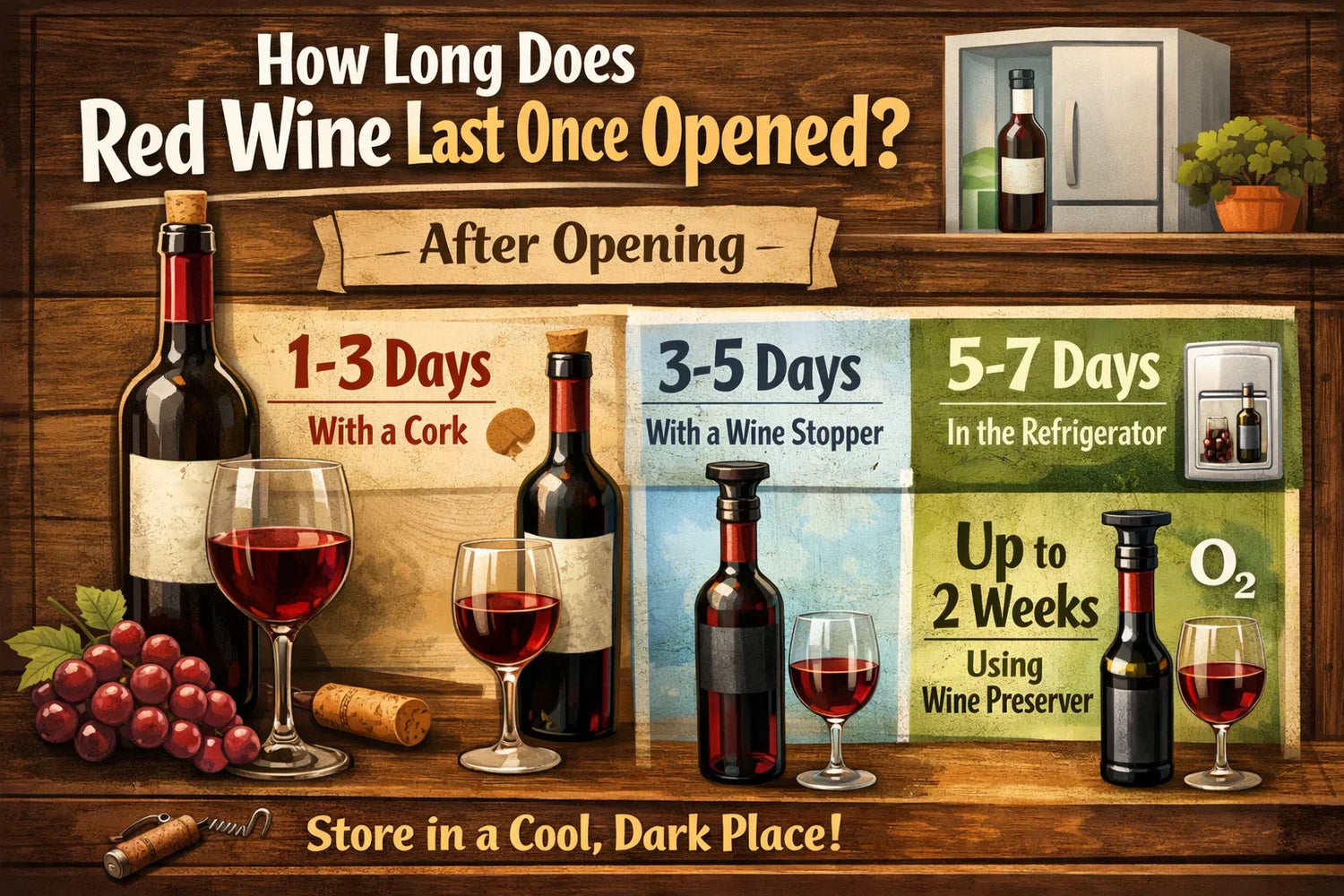
How Long Does Red Wine Last Once Opened?
Once opened, most bottles of red wine last between 3 and 5 days if stored correctly. During this time, the wine slowly changes as it reacts with oxygen. While it may still be drinkable after this period, the flavour and aroma will usually begin to decline.
Different types of red wine have slightly different lifespans after opening.
| Wine Type | How Long It Lasts After Opening |
|---|---|
| Light-bodied red | 2–3 days |
| Medium-bodied red | 3–5 days |
| Full-bodied red | 4–5 days |
| Fortified red wine | Up to 28 days |
Full-bodied wines, such as Cabernet Sauvignon or Shiraz, tend to last longer because they contain higher tannin levels and more alcohol, both of which act as natural preservatives.
In contrast, lighter wines such as Pinot Noir tend to lose their freshness faster because they have lower tannins and lighter structures.
Storing the bottle properly resealed and refrigerated can help preserve the wine’s flavour for several days after opening.
Why Opened Wine Doesn’t Last Forever
Wine is a delicate beverage, and once the bottle is opened, it begins to change due to exposure to air. The main reason wine doesn’t last forever after opening is oxidation.
Oxidation occurs when oxygen reacts with compounds in the wine. While a small amount of oxygen can enhance flavours, too much exposure gradually breaks down the wine’s structure.
As oxidation progresses, several changes occur:
- Fresh fruit aromas begin to fade
- The wine may taste flatter or dull
- The colour can become slightly brownish
- The smell may become sour or vinegar-like
These changes happen because oxygen alters the chemical composition of the wine.
It’s important to note that oxidation is different from bacterial spoilage. Oxidised wine is usually not harmful to drink, but it often tastes unpleasant.
This natural process is unavoidable once the bottle is opened, which is why wine is best enjoyed within a few days.
Factors That Affect How Long Red Wine Lasts After Opening
Not all wines behave the same way after opening. Several factors influence how long red wine will stay fresh.
Wine Style
Light-bodied wines spoil faster than full-bodied wines because they contain fewer protective compounds.
Tannin Levels
Tannins act as natural antioxidants in wine. Wines with higher tannin levels tend to last longer after opening.
Alcohol Percentage
Higher alcohol levels help slow spoilage slightly. Wines with 14–15% alcohol may last longer than those with lower alcohol content.
Storage Temperature
Cool temperatures slow down chemical reactions. Refrigerating opened wine significantly slows oxidation.
Bottle Closure
Resealing the bottle tightly reduces the amount of oxygen entering the wine.
Another factor that affects wine longevity is how much wine remains in the bottle. The more empty space in the bottle, the more oxygen is present, which speeds up oxidation.
How Long Different Types of Red Wine Last After Opening
Different styles of red wine vary in how well they hold up after opening. The following table provides a general guideline:
| Red Wine Style | Typical Lifespan |
|---|---|
| Pinot Noir | 2–3 days |
| Merlot | 3–4 days |
| Cabernet Sauvignon | 4–5 days |
| Shiraz / Syrah | 4–5 days |
| Sweet Red Wine | 3–5 days |
| Fortified Wines (Port) | Up to 28 days |
Full-bodied wines with bold flavours tend to stay enjoyable longer.
Australia is particularly known for producing Shiraz, which often has higher alcohol content and strong tannins. These characteristics help it remain stable for slightly longer after opening compared to lighter wines.
Sweet wines may also last slightly longer because sugar acts as a preservative.
Should You Refrigerate Red Wine After Opening?
Many people assume that only white wine needs refrigeration, but red wine should also be refrigerated after opening.
Refrigeration slows the chemical reactions that cause wine to spoil.
Benefits of refrigerating opened wine include:
- Slowing oxidation
- Preserving flavour longer
- Maintaining freshness
- Reducing the risk of bacterial growth
Placing an opened bottle in the refrigerator can extend its drinkable life by a few days.
Before drinking again, simply remove the bottle from the fridge and allow it to sit at room temperature for 10 to 20 minutes. This allows the wine to warm slightly and release its aromas.
This simple habit can significantly extend the life of an opened bottle.
How to Store Opened Red Wine Properly
Proper storage is one of the best ways to keep opened wine fresh.
Follow these simple steps:
- Re-cork the bottle tightly after pouring wine.
- Store the bottle upright to reduce surface exposure to oxygen.
- Refrigerate the wine to slow oxidation.
- Keep the bottle away from heat and sunlight.
- Avoid shaking the bottle, which introduces more oxygen.
Keeping the bottle upright reduces the amount of wine exposed to air inside the bottle.
A cool and dark storage environment helps preserve wine’s aroma and flavour. Even small steps like resealing the bottle properly can make a noticeable difference in how long the wine stays enjoyable.
Tools That Help Preserve Opened Wine
Several tools are available that can help extend the life of opened wine.
Vacuum Wine Stoppers
These devices remove air from the bottle, slowing the oxidation process. They are affordable and easy to use.
Inert Gas Preservation Systems
Some wine preservation sprays release inert gases such as argon into the bottle. These gases form a protective layer over the wine, preventing oxygen from reacting with it.
Wine Preservation Systems
Advanced wine systems allow wine to be poured without fully exposing it to oxygen. These devices are often used by wine collectors or restaurants.
While not essential for casual wine drinkers, these tools can extend wine freshness by several extra days or even weeks.
Signs Your Red Wine Has Gone Bad
Knowing how to identify spoiled wine can help you avoid drinking wine that no longer tastes good.
Here are some common signs that red wine has gone bad:
- A strong vinegar-like smell
- A sour or sharp taste
- A dull or flat flavour
- Brownish or cloudy colour
- Loss of fruit aromas
Wine that has gone bad usually smells noticeably different from fresh wine.
In most cases, spoiled wine is not dangerous to drink, but it may taste unpleasant. Trusting your senses especially smell and taste is the easiest way to decide whether the wine should be discarded.
Can You Drink Red Wine After 5 Days?
Red wine that has been open for five days may still be safe to drink, but its flavour is often significantly diminished.
After several days of oxidation, the wine may taste:
- Flat
- Sour
- Less fruity
If the wine still smells normal and tastes acceptable, it may still be drinkable. However, it will likely lack the complexity and balance it originally had.
Even if it no longer tastes great for drinking, slightly oxidised wine can still be useful in cooking. Many people use leftover wine for:
- Pasta sauces
- Stews
- Marinades
This is a good way to avoid wasting wine.
How to Make Opened Wine Last Longer
If you want your wine to stay fresh longer, a few simple habits can help.
Try these tips:
- Refrigerate the bottle immediately after opening
- Use a vacuum wine stopper
- Transfer leftover wine into a smaller bottle
- Keep the bottle sealed tightly
- Avoid shaking the bottle
Reducing oxygen exposure is the key to preserving wine freshness.
Even small adjustments, such as sealing the bottle tightly and storing it in the fridge, can extend the wine’s lifespan by several days.
Does Expensive Wine Last Longer Once Opened?
Many people assume that expensive wine lasts longer after opening, but this isn’t necessarily true.
The price of wine does not determine how quickly it oxidises. Once exposed to air, all wines begin to change.
However, some premium wines may contain:
- Higher tannin levels
- Greater structural complexity
- Better balance
These characteristics may allow the wine to maintain its flavour slightly longer, but oxidation will still occur.
In general, both inexpensive and premium wines should be consumed within a few days after opening.
Common Mistakes When Storing Opened Wine
Some common storage mistakes can cause wine to spoil more quickly.
These include:
- Leaving the bottle uncorked
- Storing wine near heat sources
- Keeping wine in wine cabinets
- Not refrigerating opened bottles
- Shaking the bottle frequently
- Heat and oxygen are the biggest enemies of opened wine.
By avoiding these mistakes and following simple storage practices, you can significantly extend the freshness of your wine.
Conclusion
Once a bottle of red wine is opened, it typically stays fresh for three to five days when stored properly. Factors such as wine style, alcohol content, tannin levels, and storage conditions all influence how long the wine remains enjoyable.
Exposure to oxygen gradually causes wine to oxidise, which changes its flavour and aroma over time. Refrigerating the bottle, resealing it tightly, and limiting air exposure can help slow this process.
Full-bodied wines with higher tannin levels tend to last longer after opening, while lighter wines usually spoil more quickly.
Although wine may still be safe to drink after several days, its taste and quality will gradually decline. By paying attention to smell, taste, and appearance, you can easily determine whether the wine is still enjoyable.
With the right storage habits, you can extend the life of opened wine and enjoy every bottle at its best.
Frequently Asked Questions
- How long does red wine last after opening?
Most opened red wines last three to five days when stored properly. Refrigerating the bottle and sealing it tightly can help maintain its freshness during this time.
- Should opened red wine be refrigerated?
Yes. Refrigerating opened red wine slows oxidation and helps preserve its flavour. Simply allow the wine to sit at room temperature for about 10–20 minutes before drinking again.
- Can you drink red wine a week after opening?
Wine opened for a week may still be safe to drink, but its flavour is usually significantly reduced. If it smells sour or tastes unpleasant, it is best not to drink it.
- How can you tell if red wine has gone bad?
Signs include a vinegar-like smell, sour taste, brownish colour, or loss of fruit aromas. These changes indicate the wine has oxidised.
- Does red wine last longer than white wine after opening?
In many cases, yes. Red wines often contain higher tannin levels, which act as natural preservatives and can help them last slightly longer.
- Can you store opened wine at room temperature?
It is possible, but not recommended. Storing opened wine in the refrigerator slows oxidation and helps maintain freshness longer.
- Does putting the cork back in preserve wine?
Yes. Resealing the bottle reduces oxygen exposure and helps keep the wine fresh for a longer period.
- How long does a bottle of red wine last in the fridge?
Opened red wine stored in the fridge typically remains drinkable for three to five days, depending on the wine type.
- Can spoiled wine make you sick?
Spoiled wine usually won’t make you sick, but it can taste unpleasant. If the wine smells strongly sour or vinegary, it’s best to discard it.
- What is the best way to preserve opened wine?
The best method is to reseal the bottle tightly, store it upright, and keep it in the refrigerator to slow oxidation and maintain freshness.


Leave a comment
This site is protected by hCaptcha and the hCaptcha Privacy Policy and Terms of Service apply.