



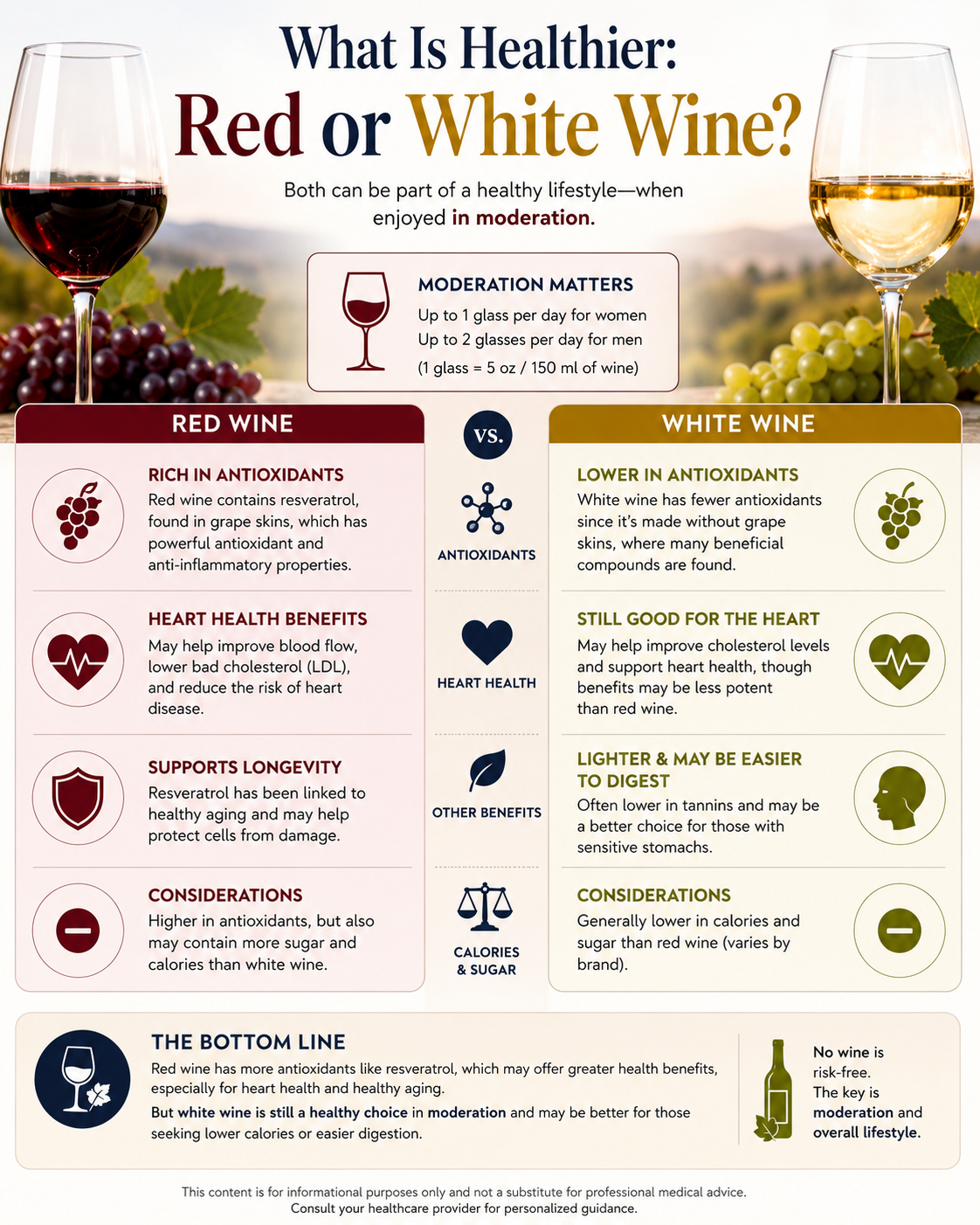
Wine has been part of human culture for thousands of years. From celebrations and dinners to relaxing evenings at home, wine continues to be one of the world’s most popular alcoholic beverages. But when it comes to health, one question keeps coming up: What is healthier? red wine or white wine?
Some people swear by the health benefits of red wine, especially for heart health. Others prefer white wine because it feels lighter, crisper, and often lower in calories. The truth is, both wines have their own nutritional profiles, benefits, and drawbacks.
If you’ve ever wondered whether your glass of Cabernet Sauvignon is healthier than your chilled Sauvignon Blanc, this guide breaks it down in a simple and practical way.
Understanding the Difference Between Red and White Wine
Before comparing health benefits, it helps to understand how these wines are made.
Red Wine
Red wine is produced using dark-colored grape varieties. During fermentation, the grape skins remain in contact with the juice. This process gives red wine its deep color, bold flavor, and high antioxidant content.
Popular red wines include:
- Cabernet Sauvignon
- Merlot
- Pinot Noir
- Shiraz
- Malbec
White Wine
White wine is usually made from green or yellow grapes, though it can also be made from red grapes with the skins removed. Since the skins are separated early, white wine contains fewer tannins and antioxidants.
Popular white wines include:
- Chardonnay
- Sauvignon Blanc
- Riesling
- Pinot Grigio
- Moscato
The biggest nutritional difference between the two comes from the grape skins. Red wine keeps them during fermentation, while white wine does not.
Nutritional Comparison: Red Wine vs White Wine
Here’s a general comparison per 5-ounce serving.
| Nutrient | Red Wine | White Wine |
|---|---|---|
| Calories | 120–125 | 115–120 |
| Carbohydrates | 3–4 g | 3–4 g |
| Sugar | Lower in dry reds | Slightly higher in some whites |
| Alcohol | 12–15% | 10–13% |
| Antioxidants | High | Moderate |
| Tannins | High | Low |
White wine may have slightly fewer calories in some cases, but red wine generally contains more beneficial plant compounds.
Why Red Wine Is Often Considered Healthier
Red wine has earned a strong reputation in the health world because of its antioxidant content.
1. Rich in Antioxidants
Red wine contains powerful antioxidants like:
- Resveratrol
- Polyphenols
- Flavonoids
- Catechins
These compounds help fight oxidative stress in the body, which is linked to aging and chronic diseases.
Resveratrol, in particular, is widely discussed for its possible role in supporting heart health and reducing inflammation.
2. Better for Heart Health
Moderate red wine consumption has often been linked to cardiovascular benefits.
Potential benefits include:
- Improved HDL (“good”) cholesterol
- Reduced blood clot formation
- Better blood vessel function
- Lower inflammation
This connection became famous through the “French Paradox,” where populations consuming moderate red wine appeared to have lower rates of heart disease despite rich diets.
However, it’s important to remember that lifestyle, food habits, and exercise also play a major role.
3. May Support Longevity
Some studies suggest moderate red wine intake may be associated with longer life expectancy due to its antioxidant profile.
The compounds found in red wine may help:
- Protect cells from damage
- Reduce inflammation
- Support healthy aging
Still, moderation is the key. Excess alcohol completely reverses these potential benefits.
4. Gut Health Benefits
Red wine contains polyphenols that may support healthy gut bacteria.
A balanced gut microbiome can influence:
- Digestion
- Immunity
- Mood
- Metabolism
Some research suggests red wine drinkers may have greater microbial diversity than those who drink other alcoholic beverages.
Health Benefits of White Wine
White wine often gets overshadowed by red wine in health discussions, but it also has some advantages.
1. Lower Calorie Option
Certain white wines can contain fewer calories than heavier red wines.
Dry white wines like Sauvignon Blanc or Pinot Grigio are often chosen by people trying to reduce calorie intake while still enjoying a drink.
2. Easier on the Stomach
White wine generally contains:
- Less tannin
- Lower histamine levels
- Lighter compounds
This may make it easier to digest for some individuals.
People who experience headaches or digestive discomfort from red wine sometimes tolerate white wine better.
3. Potential Heart and Lung Benefits
White wine still contains antioxidants, although less than red wine.
Some studies suggest moderate white wine consumption may contribute to:
- Improved circulation
- Lung function support
- Reduced oxidative stress
However, the benefits are usually considered less significant than those associated with red wine.
4. Better for Hydration Feeling
White wine is typically served chilled and has a lighter texture, making it feel more refreshing, especially in warm climates.
While alcohol itself contributes to dehydration, many people find white wine less heavy than full-bodied reds.
Which Wine Has More Antioxidants?
This category clearly favors red wine.
Because red wine ferments with grape skins and seeds, it contains much higher concentrations of antioxidants.
Key Antioxidants in Red Wine
Resveratrol
Found mainly in grape skins, resveratrol has been studied for:
- Heart protection
- Anti-aging properties
- Inflammation reduction
Polyphenols
These compounds may help protect cells from oxidative damage.
Flavonoids
Known for supporting blood vessel health and circulation.
White wine contains antioxidants too, but significantly less because the grape skins are removed early.
Which Wine Is Better for Weight Loss?
Neither wine should be considered a “weight-loss drink,” but some choices are smarter than others.
White Wine Advantages
Dry white wines can be:
- Lower in calories
- Lower in alcohol
- Lighter in sugar
Examples include:
- Sauvignon Blanc
- Brut Champagne
- Pinot Grigio
Red Wine Advantages
Some research suggests red wine compounds may help regulate fat storage and metabolism, though the effect is relatively small.
The biggest factor for weight management is still moderation.
Tips for Lower-Calorie Wine Drinking
- Choose dry wines over sweet wines
- Avoid sugary mixers
- Limit portion sizes
- Drink water alongside wine
- Avoid excessive late-night drinking
Which Wine Is Better for Skin?
This is another area where red wine gets more attention.
Red Wine and Skin
The antioxidants in red wine may help:
- Reduce oxidative stress
- Support collagen protection
- Slow visible signs of aging
Some skincare products even use grape-derived antioxidants.
However, too much alcohol can worsen:
- Dehydration
- Puffiness
- Redness
- Acne flare-ups
White Wine and Skin
White wine may be gentler for some people prone to facial flushing caused by tannins.
Still, excessive intake of either wine can negatively affect skin health.
Risks of Drinking Red or White Wine
Even though wine may offer certain benefits, alcohol still carries risks.
Common Risks of Excessive Wine Consumption
- Liver disease
- Increased cancer risk
- Sleep disruption
- Weight gain
- High blood pressure
- Addiction
- Mental health effects
No health benefit outweighs heavy drinking.
Red Wine Risks
Red wine may trigger:
- Migraines
- Acid reflux
- Histamine reactions
- Teeth staining
Its tannins and sulfites can cause sensitivity in some individuals.
White Wine Risks
White wine tends to be more acidic, which may contribute to:
- Tooth enamel erosion
- Acid reflux
- Added sugar intake in sweeter varieties
Some sweet white wines contain surprisingly high sugar levels.
Is Wine Actually Good for You?
This question remains heavily debated.
For years, moderate wine consumption was promoted as heart-healthy. More recent research has become more cautious, pointing out that:
- Alcohol carries cancer risks even in moderate amounts
- Some earlier studies may have been influenced by lifestyle factors
- Non-drinkers should not start drinking for health reasons
The healthiest approach is balance.
If you already enjoy wine responsibly, moderate consumption may fit into a healthy lifestyle. But wine should never replace proper nutrition, exercise, or medical care.
What Counts as Moderate Drinking?
Health experts generally define moderate wine consumption as:
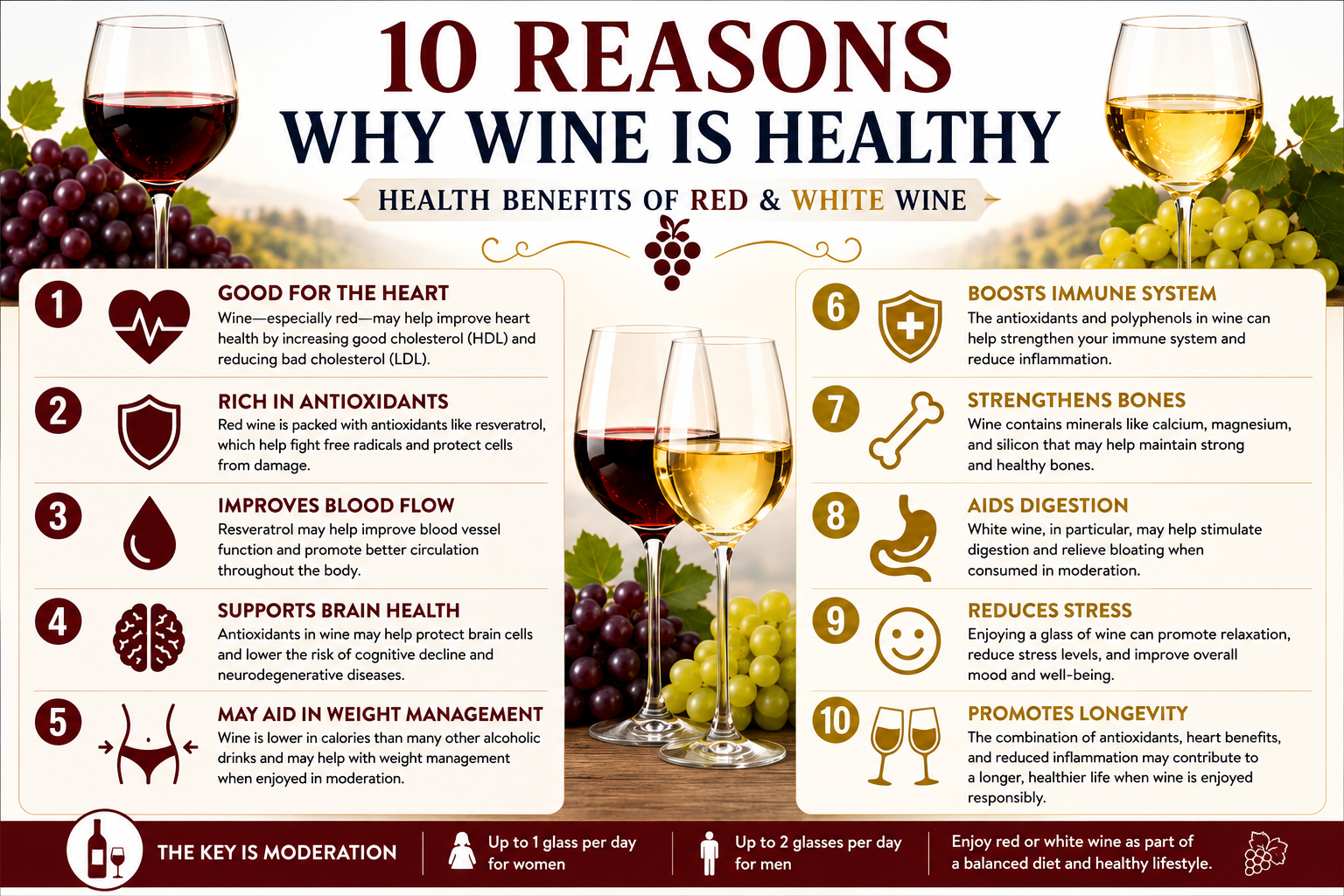
- Up to 1 glass per day for women
- Up to 2 glasses per day for men
One standard glass equals about 5 ounces (150 ml).
Drinking more than this regularly can quickly outweigh any possible benefits.
Best Healthy Wine Choices
If you want the healthiest wine options, consider these.
Healthier Red Wines
Pinot Noir
Often considered one of the healthiest red wines because of high resveratrol levels and relatively lower alcohol content.
Cabernet Sauvignon
Rich in antioxidants and heart-friendly compounds.
Merlot
Smooth and moderate in tannins.
Healthier White Wines
Sauvignon Blanc
Dry, crisp, and lower in sugar.
Pinot Grigio
Light-bodied and lower in calories.
Brut Champagne
Usually lower in sugar than many still wines.
Red Wine vs White Wine: Final Verdict
So, what is healthier: red or white wine?
Overall, red wine generally comes out ahead due to its higher antioxidant content and stronger association with heart-health benefits. Compounds like resveratrol and polyphenols give red wine an advantage in many nutritional comparisons.
However, white wine also has benefits:
- Often lighter and lower in calories
- Easier for some people to tolerate
- Refreshing and less tannic
At the end of the day, the healthiest choice depends on:
- Your health conditions
- Your tolerance
- Your drinking habits
- Portion size
- Overall lifestyle
The real key is moderation.
A single glass enjoyed occasionally alongside a healthy diet is very different from excessive alcohol consumption.
Conclusion
Both red and white wine can be part of a balanced lifestyle when consumed responsibly. Red wine tends to offer more antioxidants and potential heart-health benefits, while white wine may appeal to those seeking a lighter, lower-calorie option.
Neither wine is a miracle health drink, and excessive consumption can lead to serious health problems. If you drink wine, the smartest approach is to enjoy quality over quantity and pair it with healthy habits.
So whether you prefer a bold glass of Pinot Noir or a chilled Sauvignon Blanc, moderation remains the most important ingredient for better health.


Leave a comment
This site is protected by hCaptcha and the hCaptcha Privacy Policy and Terms of Service apply.