



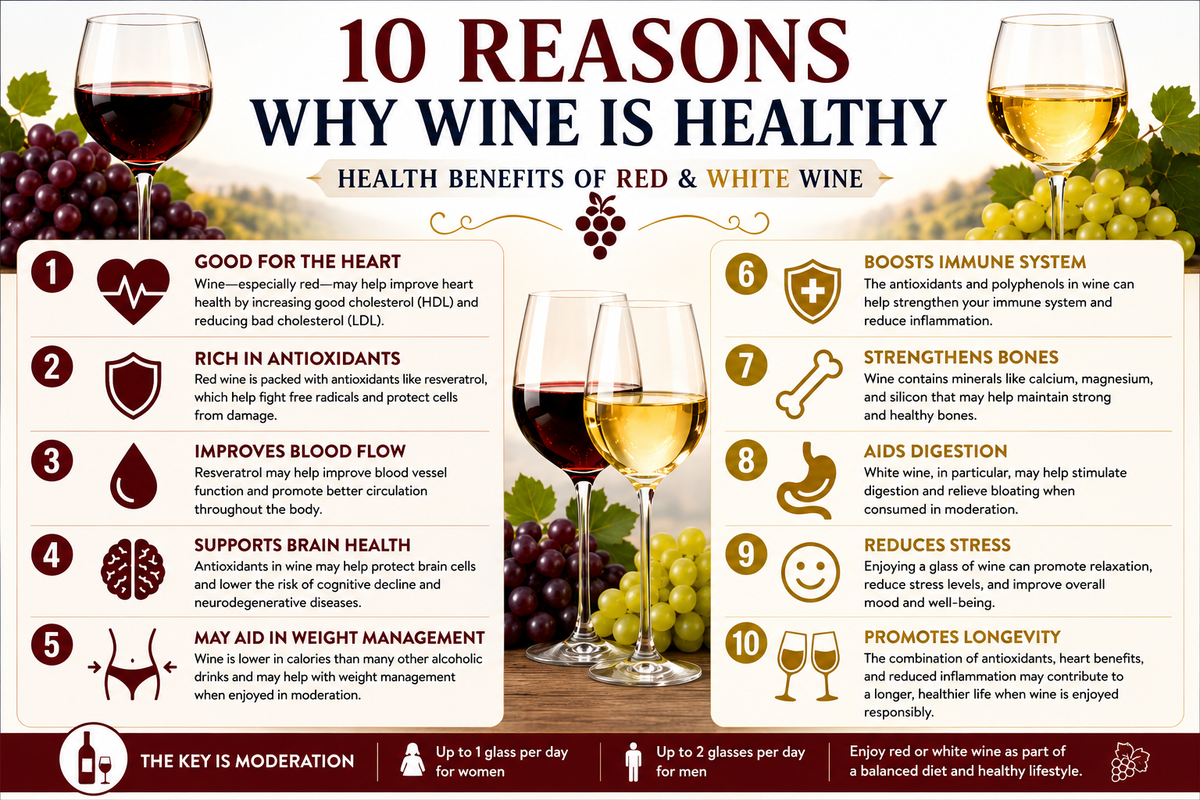
Wine has been enjoyed for centuries across different cultures, cuisines, and celebrations. Beyond its rich flavors and relaxing experience, wine has also gained attention for its potential health benefits. From supporting heart health to providing antioxidants, moderate wine consumption may offer several wellness advantages when enjoyed responsibly.
Of course, balance is important. Drinking excessive alcohol can harm your health, but moderate wine intake especially red wine has been linked to certain positive effects on the body. This is one reason why wine often appears in discussions about healthy lifestyles, particularly in Mediterranean diets.
So, what exactly makes wine healthy? Let’s explore 10 reasons why wine can be beneficial when consumed in moderation.
1. Wine Is Rich in Antioxidants
One of the biggest reasons wine is considered healthy is its antioxidant content.
Red wine, in particular, contains powerful antioxidants such as:
- Resveratrol
- Polyphenols
- Flavonoids
- Catechins
These compounds help protect the body from oxidative stress caused by free radicals. Free radicals can damage cells over time and contribute to aging and chronic diseases.
Antioxidants may help:
- Reduce inflammation
- Protect blood vessels
- Support healthy aging
- Improve overall wellness
Red wine contains higher antioxidant levels because it is fermented with grape skins, where many beneficial compounds are naturally found.
2. Wine May Support Heart Health
Moderate wine consumption has long been associated with better cardiovascular health.
Research suggests wine may help:
- Increase good HDL cholesterol
- Improve blood circulation
- Reduce blood clot formation
- Support healthy blood vessels
This connection became popular through the “French Paradox,” where people in certain regions of France had relatively low heart disease rates despite consuming rich foods regularly.
The antioxidants in wine, especially resveratrol, are believed to contribute to these heart-friendly effects.
However, moderation is essential. Excessive alcohol consumption can increase blood pressure and negatively impact heart health.
3. Wine Can Help Reduce Stress
After a long day, many people enjoy a glass of wine to relax and unwind. Moderate wine consumption may help reduce stress and promote calmness.
Wine may help:
- Encourage relaxation
- Improve mood temporarily
- Reduce social anxiety in some settings
- Create a calming routine
Certain compounds in wine may influence brain chemistry in ways that promote relaxation.
That said, wine should never become a primary coping mechanism for chronic stress or emotional problems. Responsible consumption is key.
4. Wine May Promote Longevity
Some studies suggest that moderate wine drinkers may live longer than heavy drinkers or those who consume excessive alcohol.
The antioxidants found in wine may help protect cells and reduce age-related damage.
Healthy lifestyle patterns associated with moderate wine drinkers often include:
- Balanced diets
- Social eating habits
- Better stress management
- Active lifestyles
Red wine is especially linked to longevity because of its polyphenol content.
While wine alone is not a “magic anti-aging solution,” it may be part of a balanced and healthy lifestyle when consumed wisely.
5. Wine May Benefit Brain Health
Moderate wine consumption may support cognitive function as people age.
Some research suggests that wine antioxidants could help:
- Protect brain cells
- Improve blood flow to the brain
- Reduce inflammation linked to aging
- Lower the risk of cognitive decline
Resveratrol has gained attention for its potential neuroprotective properties.
Although more research is still needed, some studies indicate moderate wine intake may be associated with lower rates of dementia compared to excessive drinking.
However, heavy alcohol use can seriously damage brain health, so moderation remains extremely important.
6. Wine Can Support Digestive Health
Wine contains polyphenols that may positively influence gut bacteria.
A healthy gut microbiome is important for:
- Digestion
- Immunity
- Nutrient absorption
- Overall health
Red wine, especially, may encourage the growth of beneficial gut bacteria.
Some researchers believe these compounds act similarly to prebiotics, helping support a healthier digestive environment.
Additionally, wine is traditionally enjoyed alongside meals, which may contribute to slower eating and improved digestion.
7. Wine May Help Control Blood Sugar Levels
Moderate wine consumption may influence insulin sensitivity and blood sugar control in some individuals.
Certain studies suggest red wine could help:
- Improve insulin response
- Reduce insulin resistance
- Support metabolic health
Dry wines generally contain lower sugar levels compared to sweet alcoholic beverages or cocktails.
For people managing blood sugar, dry red wines may be a better option than sugary drinks.
Still, individuals with diabetes or metabolic conditions should consult healthcare professionals before regularly consuming alcohol.
8. Wine Contains Natural Plant Compounds
Wine is made from grapes, which naturally contain beneficial plant-based compounds.
These compounds may help:
- Reduce inflammation
- Support immune health
- Protect cells from damage
- Improve circulation
Red wine contains particularly high levels of these natural compounds due to skin fermentation.
Compared to many processed alcoholic beverages, wine offers more naturally occurring nutrients and antioxidants.
This is one reason why wine is often considered a more “natural” alcoholic option when consumed moderately.
9. Wine May Support Social and Emotional Wellness
Wine is often connected to social gatherings, celebrations, and shared meals. These social experiences can positively impact mental and emotional well-being.
Moderate wine consumption in social settings may encourage:
- Relaxation
- Conversation
- Connection with others
- Enjoyment during meals
Strong social relationships are linked to better overall health and longevity.
In many cultures, wine is part of slow dining traditions that emphasize mindfulness, conversation, and enjoying food in moderation rather than rushing through meals.
The lifestyle surrounding wine may contribute to some of its perceived health benefits.
10. Wine May Be Better Than Sugary Alcoholic Drinks
Compared to many cocktails, flavored alcoholic beverages, and sugary mixed drinks, wine can sometimes be the healthier option.
Many cocktails contain:
- High sugar content
- Artificial syrups
- Excess calories
- Sugary sodas or juices
Dry wines usually contain fewer additives and less sugar.
For example:
| Drink | Average Calories |
|---|---|
| Dry Red Wine | 120–125 |
| Dry White Wine | 115–120 |
| Margarita | 250–400 |
| Pina Colada | 300–500 |
| Sweet Cocktails | 200–450 |
Choosing a moderate serving of wine instead of high-sugar alcoholic beverages may reduce overall calorie and sugar intake.
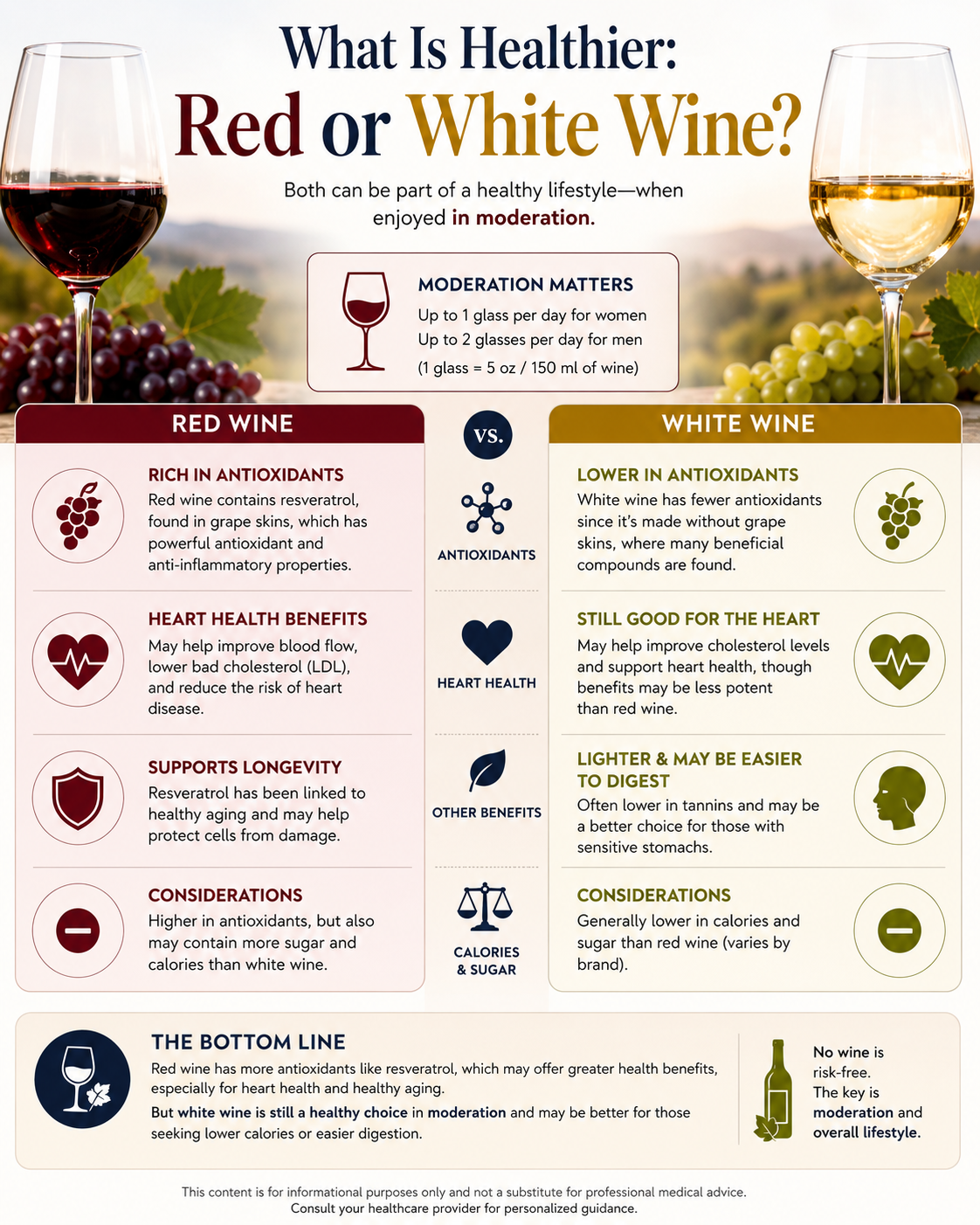
Is Red Wine Healthier Than White Wine?
Both wines offer certain benefits, but red wine generally receives more attention for health reasons.
Why Red Wine Often Wins
Red wine contains higher levels of:
- Resveratrol
- Polyphenols
- Antioxidants
These compounds come from grape skins used during fermentation.
White Wine Benefits
White wine may still offer advantages such as:
- Lower calories in some varieties
- Lighter taste
- Easier digestion for some individuals
Ultimately, the healthiest choice depends on personal preference, moderation, and overall lifestyle.
What Counts as Moderate Wine Consumption?
Health experts generally define moderate drinking as:
- One glass per day for women
- Up to two glasses per day for men
A standard serving equals about 5 ounces (150 ml).
Drinking beyond moderate levels can quickly increase health risks and outweigh potential benefits.
Important Risks to Remember
Even though wine may provide certain health advantages, alcohol still carries risks.
Excessive wine consumption can contribute to:
- Liver disease
- High blood pressure
- Weight gain
- Sleep disruption
- Addiction
- Increased cancer risk
Wine should never replace healthy habits such as:
- Exercise
- Proper nutrition
- Hydration
- Sleep
- Medical care
Non-drinkers should not feel pressured to start drinking purely for health reasons.
Tips for Enjoying Wine in a Healthy Way
If you choose to drink wine, here are a few smart habits to follow:
Choose Dry Wines
Dry wines usually contain less sugar than sweet wines.
Drink Slowly
Sip wine gradually instead of consuming multiple glasses quickly.
Pair Wine With Food
Drinking wine alongside meals may help reduce alcohol absorption.
Stay Hydrated
Drink water between glasses to reduce dehydration.
Avoid Excessive Drinking
More wine does not equal more health benefits.
Conclusion
Wine has earned its reputation as one of the healthier alcoholic beverages for several reasons. Rich in antioxidants and natural plant compounds, moderate wine consumption may support heart health, digestion, relaxation, and overall wellness.
Red wine stands out for its high levels of resveratrol and polyphenols, while white wine offers a lighter, lower-calorie option for many people. Beyond the drink itself, wine is often associated with balanced meals, social connection, and mindful living.
However, the keyword is moderation. Drinking too much wine can quickly lead to serious health risks that outweigh any potential benefits.
When enjoyed responsibly, a glass of wine can be more than just a pleasant drink it can be part of a balanced and enjoyable lifestyle.


Leave a comment
This site is protected by hCaptcha and the hCaptcha Privacy Policy and Terms of Service apply.