


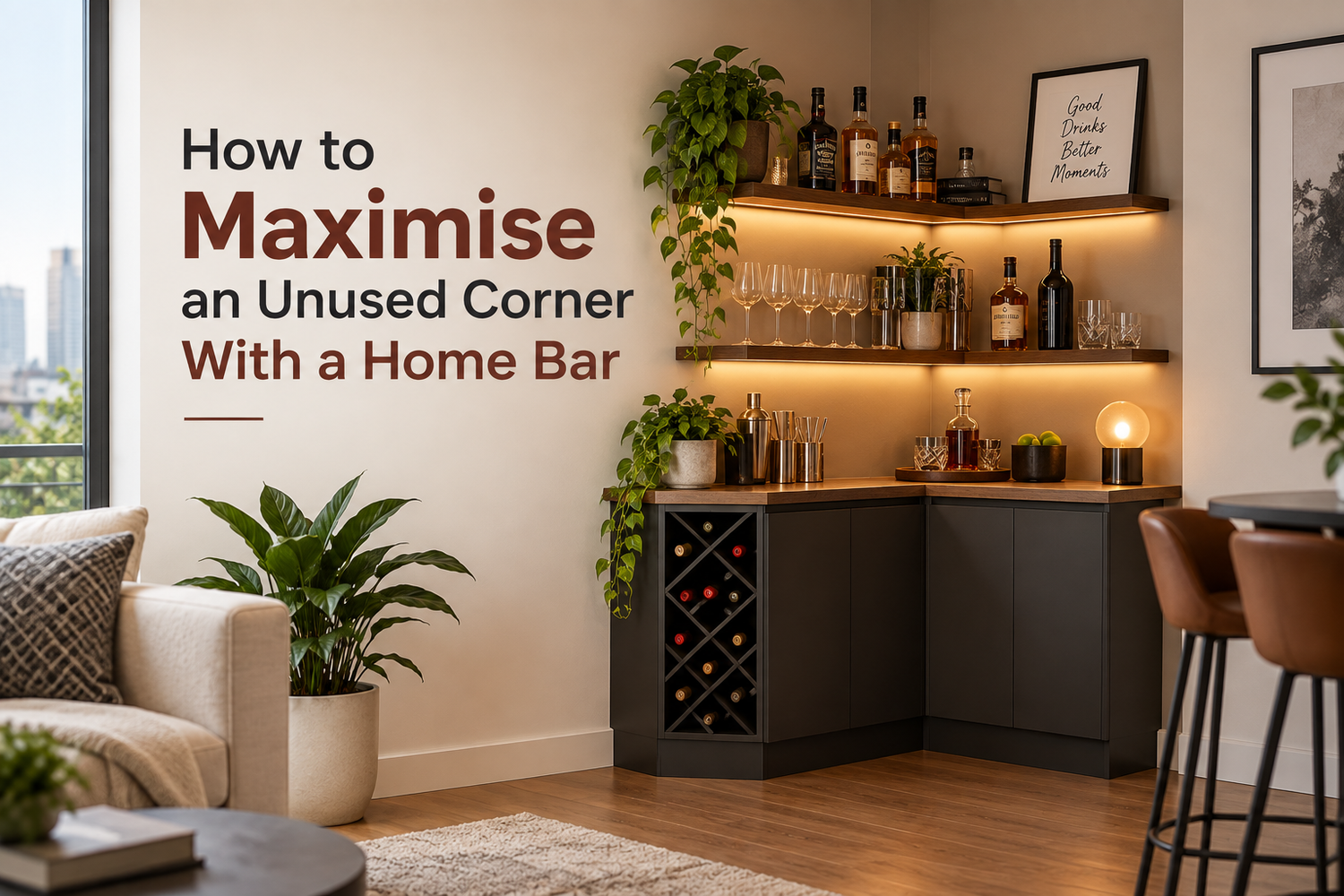
An unused corner can often become one of the most valuable spaces in your home with the right design approach. Whether it is an awkward nook in the living room, an empty dining-area wall, or an underused corner of an apartment, transforming it into a home bar can add functionality, style, and character without requiring a major renovation.
A well-planned home bar does not need a large footprint. With smart storage, appropriately sized furniture, and thoughtful lighting, even a compact corner can become an inviting space for entertaining guests or enjoying a quiet drink at home.
1. Start by Measuring the Available Space
Before buying furniture or planning your home bar, measure the corner carefully. Note the width, height, and depth available, as well as the location of electrical outlets, windows, doors, and nearby furniture.
For smaller spaces, every centimetre matters. Avoid choosing oversized furniture simply because it looks attractive in a showroom. Instead, look for pieces that fit comfortably into the available area while leaving enough room to move around.
Corner dimensions can also help determine whether you need a freestanding bar cabinet, wall-mounted storage, or a compact counter. Creating a simple layout on paper before purchasing anything can prevent overcrowding.
2. Choose Bar Cabinets for Smart Storage
Storage is one of the most important elements of a successful home bar. Rather than leaving bottles, glasses, and accessories scattered across the counter, use Bar Cabinets to keep everything organised.
A bar cabinet can provide dedicated storage for bottles, glassware, cocktail tools, napkins, and other entertaining essentials. For a small corner, a tall cabinet can make better use of vertical space without taking up much floor area.
Closed cabinetry is particularly useful if you want the bar to blend into your existing interior. When the doors are closed, the space can look like an elegant piece of furniture rather than a dedicated entertainment area.
For a more contemporary appearance, consider cabinets with glass doors or open shelving. This allows attractive bottles and glassware to become part of the room's décor.
3. Make the Counter the Focal Point
If your corner has enough width, introduce a compact bar counter. Bar Counters create a practical surface for preparing drinks while giving the home bar a defined identity.
The counter can be as simple as a timber shelf mounted against the wall or as elaborate as a custom-built countertop with integrated storage. Choose a material that complements the existing interior, such as timber, stone, laminate, or another durable surface.
If you have enough room, a couple of bar stools can turn the corner into a casual seating area. However, don't force seating into a small space. A beautiful and functional standing bar can work just as well.
4. Use Vertical Space
One of the easiest ways to maximise a small corner is to think vertically. Walls provide valuable storage opportunities without consuming additional floor space.
Install floating shelves above the bar counter for displaying glassware, cocktail ingredients, decorative objects, and selected bottles. Wall-mounted racks can also create an attractive feature while keeping the countertop clear.
If the ceiling is relatively high, consider a tall storage unit that takes advantage of the full height of the wall. Combining a lower cabinet with upper shelving can create a balanced arrangement that offers both concealed and open storage.
5. Add a Wine Rack
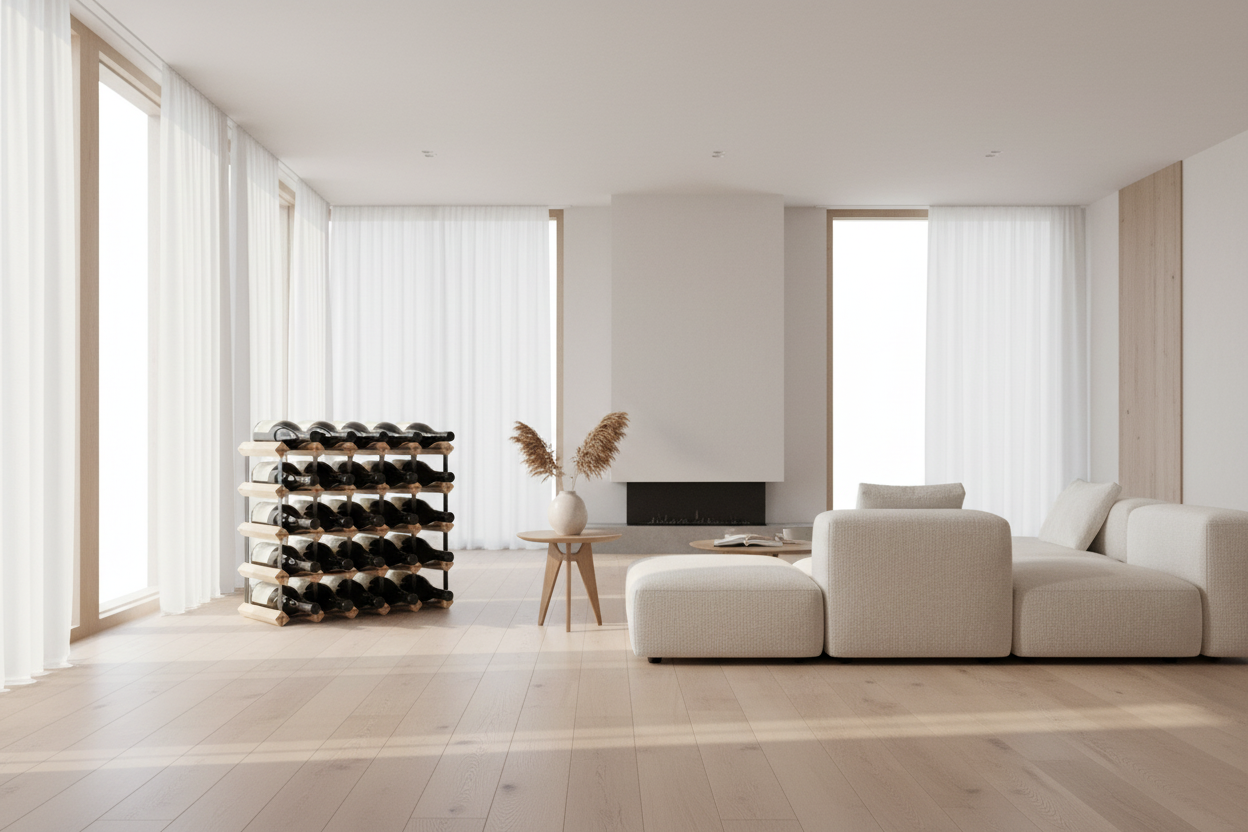
Wine storage can be an important part of a home bar, particularly if you regularly entertain. A thoughtfully designed wine rack Sydney homeowners can incorporate into compact spaces can provide both practical storage and a decorative feature.
A wine rack can be integrated into a cabinet, positioned beneath the counter, or mounted on the wall. The best location depends on your available space and how you want the bottles to interact with the overall design.
For a sophisticated appearance, arrange wine bottles neatly and combine them with glassware or decorative shelving. If you are creating a larger custom bar, dedicated wine storage can become one of the central design elements.
Remember that wine storage should also consider appropriate temperature and light conditions. A decorative wine rack is useful for presentation and short-term storage, but wines that require controlled conditions may need more suitable storage.
6. Choose the Right Lighting
Lighting can completely change the atmosphere of a home bar. A previously dull corner can become a stylish focal point simply by introducing layered lighting.
Pendant lights above a bar counter can provide both illumination and visual interest. Under-shelf LED lighting can highlight bottles and glassware, while wall lights can create a warm ambience.
For a compact bar, avoid relying solely on bright overhead lighting. Combining task lighting with softer ambient illumination makes the space feel more inviting, especially when entertaining in the evening.
You can also use lighting to highlight architectural details, shelving, artwork, or your wine collection.
7. Keep the Colour Scheme Consistent
A home bar should feel like a natural extension of the room rather than an unrelated addition. Match your cabinets, counter, shelving, and accessories with the existing décor.
For a modern interior, neutral cabinetry with metallic hardware can create a clean appearance. Timber finishes can introduce warmth, while darker finishes can create a more dramatic and sophisticated atmosphere.
If the rest of the room is minimalist, keep the bar visually simple. In a more traditional or eclectic home, decorative shelves, statement hardware, artwork, and vintage-inspired accessories can give the corner more personality.
8. Make Every Element Serve a Purpose
When working with a small corner, avoid unnecessary clutter. Every element should have a purpose.
A compact setup might include:
- One bar cabinet for bottles and accessories
- A small countertop for drink preparation
- Two floating shelves for glassware
- A dedicated wine rack
- A small tray for cocktail tools
- Integrated or under-shelf lighting
This approach creates a functional bar without overwhelming the room.
You can also use trays and organisers inside cabinets to keep smaller accessories together. Drawer inserts can be useful for bottle openers, cocktail shakers, strainers, napkins, and other bar essentials.
9. Consider a Custom-Built Solution
Sometimes an unused corner has unusual dimensions that make standard furniture difficult to fit. In these situations, a custom home bar can make better use of the available space.
A bespoke design can incorporate cabinets, shelves, a countertop, wine storage, lighting, and even a small refrigerator according to the dimensions of the room.
Customisation is particularly useful for apartments and homes where space is limited. Instead of trying to make a standard cabinet fit, the entire unit can be designed around the corner.
10. Add Personality With Décor
Once the practical elements are in place, use décor to make the bar feel personal. Artwork, plants, mirrors, decorative trays, attractive glassware, and carefully selected bottles can add character.
A mirror behind the bar can make a small corner feel larger by reflecting light and creating additional visual depth. Artwork can establish a theme, while greenery can soften the look of cabinetry and hard surfaces.
However, keep the styling controlled. A cluttered display can make a small bar feel even smaller.
Create a Stylish Bar From an Overlooked Corner
An unused corner doesn't have to remain wasted space. With careful planning, the right Bar Cabinets, functional Bar Counters, vertical storage, lighting, and a well-positioned wine rack Sydney homeowners can incorporate into their design, even a compact area can become a sophisticated home bar.
The key is to work with the space rather than against it. Measure first, prioritise storage, use the walls intelligently, and select furniture that complements the rest of your home. Whether you prefer a minimalist drinks station or a fully equipped entertaining area, an overlooked corner can become a practical and stylish feature that makes your home more enjoyable.

Leave a comment
This site is protected by hCaptcha and the hCaptcha Privacy Policy and Terms of Service apply.