


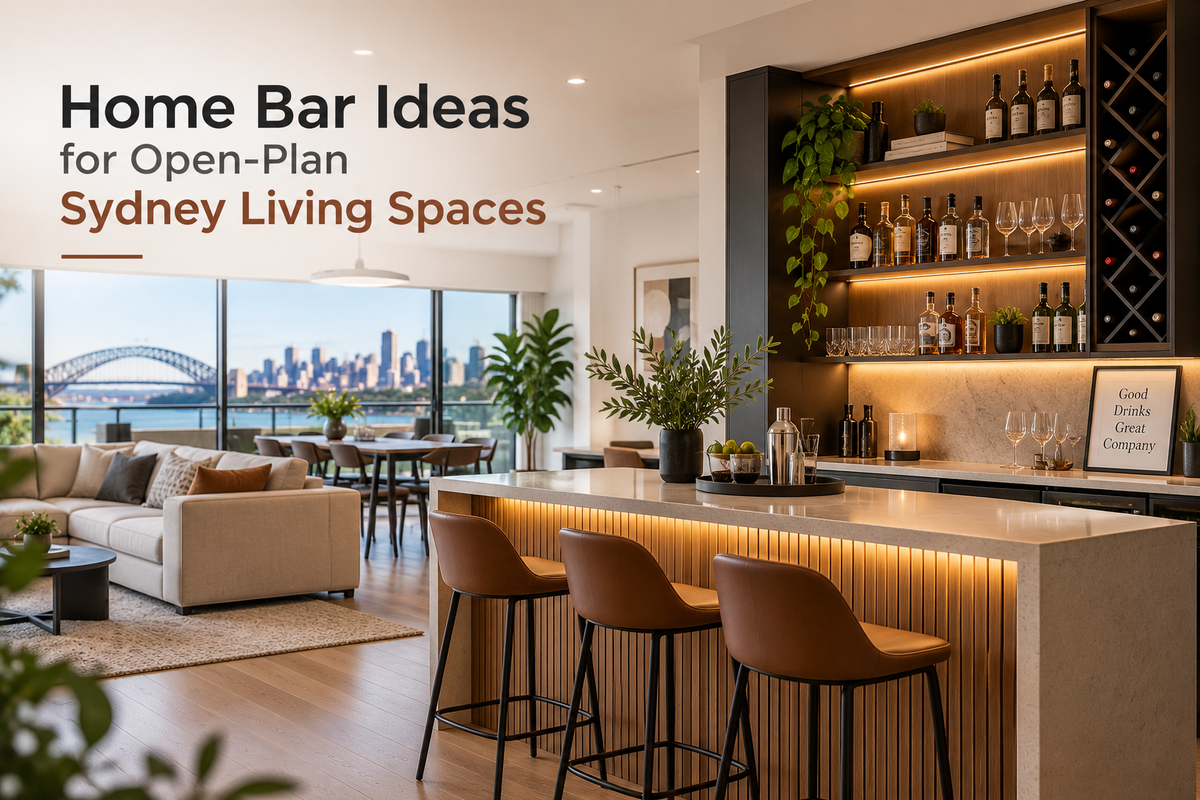
Open-plan living has become a popular choice in Sydney homes, combining kitchens, dining areas, and living rooms into one flexible space. While this layout creates a spacious and social atmosphere, it can sometimes be challenging to define individual areas without making the room feel divided.
A stylish home bar can be the perfect solution. It adds a dedicated entertaining zone while complementing the open character of the room. From compact wall-mounted setups to statement bar counters, there are plenty of ways to create a home bar that suits your space, lifestyle, and interior design.
Here are some practical and stylish home bar ideas for open-plan Sydney living spaces.
1. Create a Bar Along an Empty Wall
An unused wall can provide the perfect location for a home bar. Instead of allowing the wall to remain empty, transform it into a functional entertaining station with cabinetry, shelving, and a countertop.
A wall-mounted design works particularly well in apartments and smaller Sydney homes because it uses vertical space while keeping the floor area open. Floating shelves can hold glassware and bottles, while closed storage can hide cocktail accessories and other items.
Choose finishes that complement your existing kitchen or living room so the bar feels like part of the overall interior rather than an addition.
2. Use a Kitchen Island as a Bar
In many open-plan homes, the kitchen island naturally becomes the centre of activity. You can enhance its entertaining potential by incorporating a dedicated drinks area.
Consider adding a wine storage section, glass holders, or a small drinks station at one end of the island. If space permits, extend the countertop slightly to create a casual seating area with bar stools.
This approach works especially well when you regularly entertain because guests can interact with the person preparing drinks without entering the main kitchen work zone.
3. Add a Stylish Bar Cabinet
A freestanding bar cabinet can be an excellent option if you don't want to commit to permanent cabinetry. It can be positioned against a wall, beside a dining area, or within a larger living room.
Choose a cabinet with enough internal storage for bottles, glasses, cocktail equipment, and accessories. A design with doors allows you to conceal everything when the bar isn't being used, keeping the open-plan room looking neat.
For a more decorative approach, choose a cabinet that doubles as a furniture feature. Timber finishes, textured doors, glass panels, and contemporary hardware can turn the cabinet into a focal point.
4. Define the Bar With a Counter
One of the easiest ways to visually separate a home bar from the rest of an open-plan room is by using a counter.
A compact bar counter can establish a clear boundary between the living and entertaining zones without creating a physical wall. It can also provide additional preparation space and casual seating.
If your room is large enough, consider placing stools on the outside of the counter. This creates a social area where guests can sit and chat while drinks are being prepared.
The counter material should coordinate with your existing kitchen or furniture. Matching or complementary finishes help create a cohesive appearance throughout the open-plan space.
5. Take Advantage of a Corner
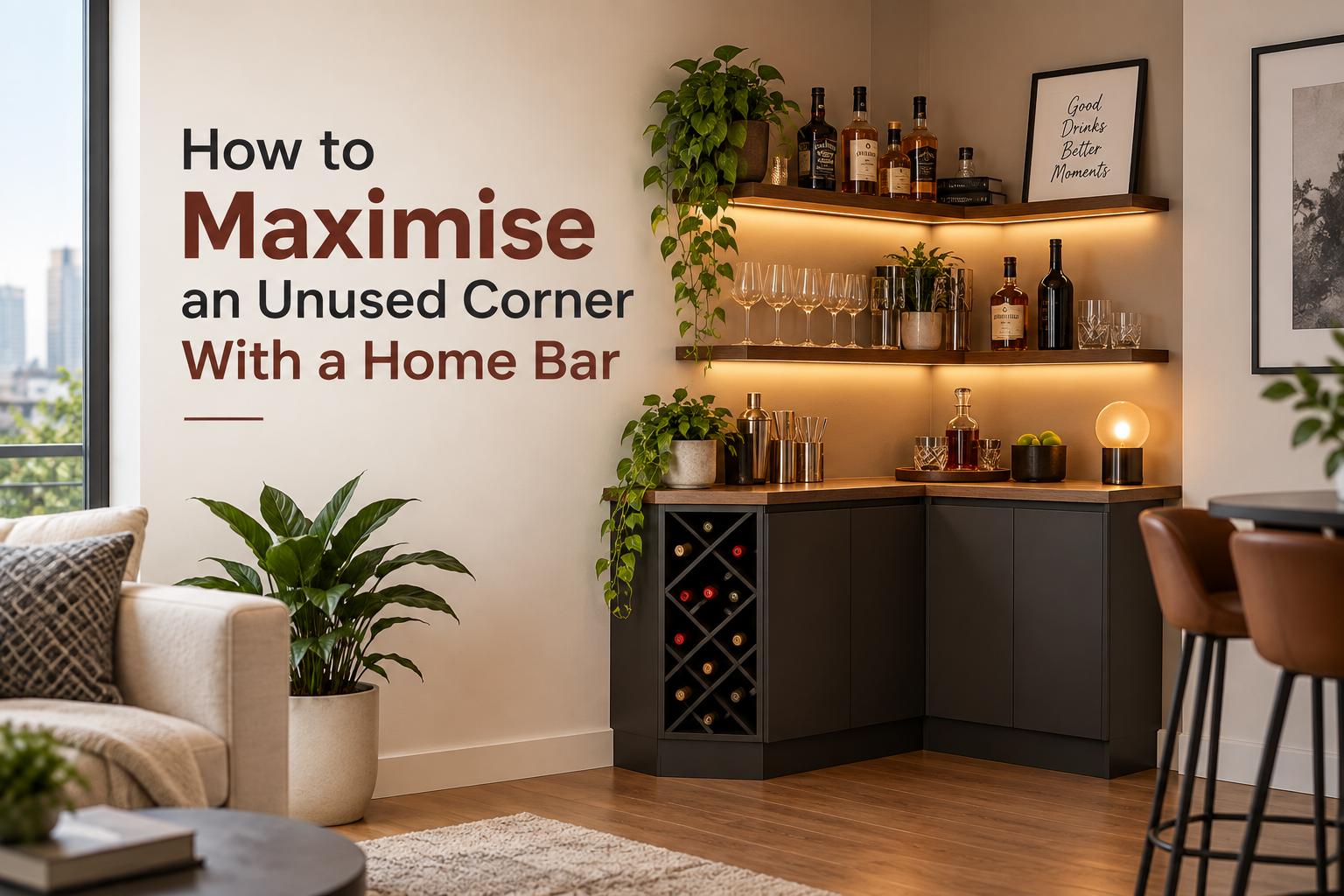
Corners are often overlooked in open-plan interiors. However, an unused corner can become an ideal location for a compact home bar.
A corner setup can include a narrow cabinet, floating shelves, a countertop, and decorative lighting. If the space allows, you can also include a small wine rack or drinks refrigerator.
The advantage of using a corner is that it keeps the bar away from major walkways. This is particularly useful in busy open-plan homes where maintaining comfortable circulation is important.
6. Make the Bar a Feature Wall
If you want your home bar to become a design highlight, consider creating a feature wall.
A feature wall could include textured panels, timber finishes, stone-look surfaces, wallpaper, artwork, or decorative tiles. Shelving can then be installed against the wall to display bottles and glassware.
Backlighting is another way to create visual impact. Soft lighting behind shelves can make bottles and glassware stand out while adding warmth to the room during evening entertaining.
The trick is to make the feature interesting without allowing it to overpower the rest of the living space.
7. Incorporate Wine Storage
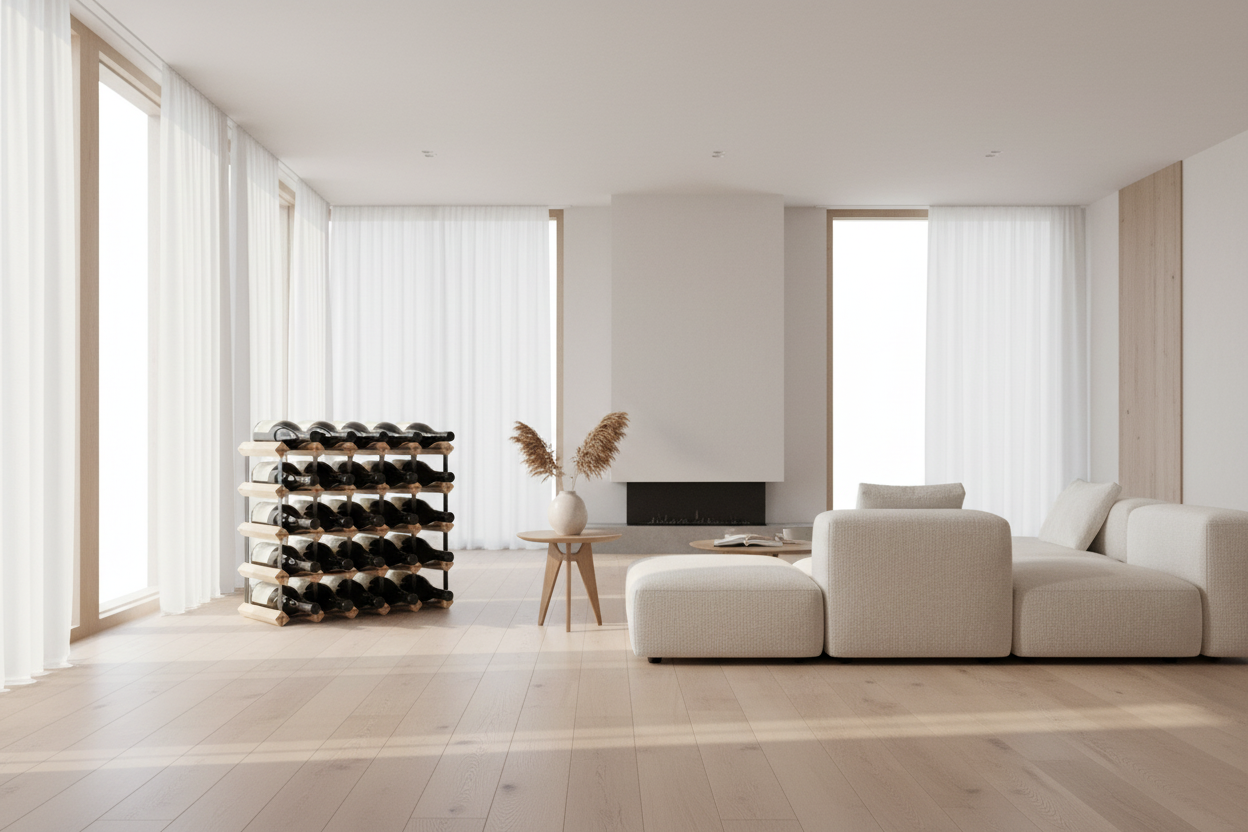
Wine storage can add both functionality and visual appeal to a home bar. Depending on your collection and available space, you could incorporate a small wine rack beneath the counter or create dedicated shelving.
For Sydney homeowners who enjoy entertaining, a purpose-designed wine storage area can keep bottles organised and easily accessible.
If you have a larger collection, consider combining wine storage with a temperature-controlled wine refrigerator. For smaller collections, decorative racks can provide a practical storage solution while contributing to the overall aesthetic.
8. Use Lighting to Create Ambience
Lighting is essential for an inviting home bar. Because open-plan spaces often rely on general ceiling lighting, adding dedicated lighting can help define the bar area.
Pendant lights above a counter can create a visual boundary between the bar and surrounding spaces. LED strips beneath shelves or inside cabinets can provide subtle illumination, while wall lights can add decorative character.
Warm lighting generally works well for entertaining because it creates a relaxed atmosphere. Consider installing dimmable lights so you can adjust the brightness depending on the occasion.
9. Match the Bar With Your Interior Style
The best home bars look as though they were designed with the rest of the home rather than added afterwards.
For contemporary Sydney interiors, consider clean lines, neutral colours, minimalist cabinetry, and simple shelving. If your home has a coastal feel, natural timber and lighter finishes can complement the surrounding décor.
For a more luxurious look, incorporate stone surfaces, metallic hardware, glass shelving, and statement lighting.
Whatever style you choose, repeat materials, colours, or textures already present in your kitchen and living room. This creates visual continuity across the open-plan layout.
10. Consider a Mobile Bar
Not every home needs a permanent bar installation. A mobile bar trolley can be a flexible alternative, particularly for renters or people who like to change their interior layout.
A well-designed trolley can hold bottles, glasses, cocktail tools, and serving accessories. It can be positioned near the dining table when entertaining and moved elsewhere when you need more space.
This option also allows you to experiment with different locations before committing to a permanent home bar.
11. Keep the Space Clutter-Free
Open-plan rooms benefit from a clean and organised appearance. Too many bottles, glasses, and accessories on display can make the bar look messy and interfere with the overall design.
Use a combination of open and closed storage. Display a few attractive bottles or glasses while keeping less attractive equipment inside cabinets.
Trays can also help group cocktail accessories together, making the counter easier to clean and maintain.
Remember that the goal isn't simply to add more storage—it is to create a bar that feels intentional and visually balanced.
12. Design for Entertaining
A home bar should ultimately support the way you use your home. Think about where guests naturally gather and position the bar accordingly.
If your dining table is the main entertaining area, place the bar nearby. If people tend to gather around the lounge, a bar positioned between the living and dining zones could work better.
Make sure there is enough space around the bar for people to move comfortably. Avoid placing furniture directly in major walkways or blocking access to doors and other frequently used areas.
Final Thoughts
An open-plan Sydney living space provides plenty of opportunities to create a stylish and practical home bar. Whether you choose a compact corner bar, a built-in counter, an elegant cabinet, a kitchen island setup, or a flexible bar trolley, the key is to integrate it with the existing room.
Focus on smart storage, suitable proportions, complementary materials, effective lighting, and easy movement around the space. A well-designed home bar doesn't need to dominate an open-plan interior. Instead, it can subtly define an entertaining zone while adding personality and functionality.
With the right design, even a modest home bar can become one of the most enjoyable features of an open-plan Sydney home—giving you a dedicated place to prepare drinks, entertain friends, and make the most of your living space.

Leave a comment
This site is protected by hCaptcha and the hCaptcha Privacy Policy and Terms of Service apply.