



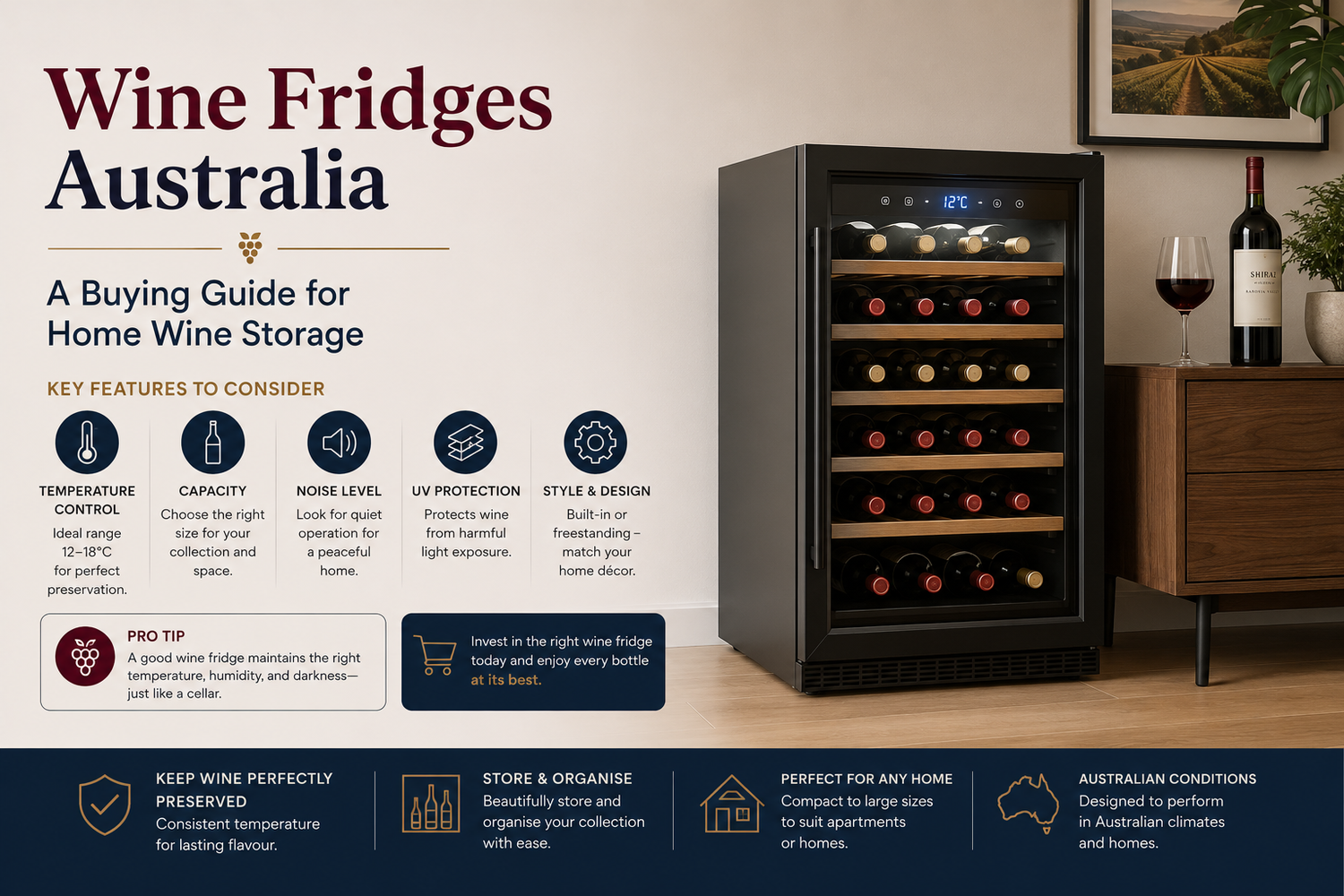
If you enjoy collecting or drinking wine, investing in a quality wine fridge is one of the best ways to protect your collection. Australia's warm climate can expose wine to fluctuating temperatures, making proper storage essential for preserving flavour, aroma, and ageing potential.
Unlike a standard household refrigerator, a wine fridge is specifically designed to maintain consistent temperature and humidity levels while minimising vibration and protecting bottles from harmful UV light. Whether you're storing a dozen bottles for weekend entertaining or building a serious collection, choosing the right wine fridge ensures your wines remain in excellent condition.
This comprehensive 2026 buying guide explains everything you need to know before purchasing a wine fridge in Australia, including types, sizes, features, pricing, installation tips, and expert advice.
Why Invest in a Wine Fridge?
Wine is sensitive to changes in temperature, humidity, light, and vibration. Improper storage can negatively affect its taste and longevity.
A dedicated wine fridge provides several important benefits:
- Maintains a consistent storage temperature
- Protects wine from excessive heat
- Reduces vibration that can disturb sediment
- Shields bottles from UV light
- Maintains suitable humidity levels
- Organises your collection efficiently
- Enhances the appearance of your home bar or kitchen
For Australian homes, where summer temperatures can exceed 35°C in many regions, a wine fridge provides peace of mind that your collection is being stored under optimal conditions.
Wine Fridge vs Standard Refrigerator
Many people assume a kitchen refrigerator can store wine safely. However, there are significant differences.
Standard Refrigerator
- Too cold for long-term wine storage
- Low humidity may dry out corks
- Frequent temperature fluctuations
- High vibration from compressor operation
- Strong food odours
Wine Fridge
- Designed specifically for wine
- Stable temperature
- Controlled humidity
- Low vibration
- UV-protected glass
- Adjustable shelving for bottles
A wine fridge creates an environment much closer to a traditional wine cellar.
Types of Wine Fridges
There are several types of wine refrigerators available across Australia.
Freestanding Wine Fridges
Freestanding models are the most popular choice.
Benefits include:
- Easy installation
- Wide range of sizes
- Can be relocated
- Cost-effective
- Suitable for most homes
They work well in kitchens, dining rooms, home bars, and entertainment spaces.
Built-In Wine Fridges
Built-in units fit neatly beneath kitchen benchtops or within cabinetry.
Advantages include:
- Seamless appearance
- Space saving
- Premium finish
- Ideal for renovations
- Perfect for modern kitchens
They require proper ventilation according to the manufacturer's specifications.
Integrated Wine Fridges
Integrated models are concealed behind cabinetry panels.
These offer:
- Minimalist appearance
- Luxury finish
- Custom kitchen integration
- High-end design
They are increasingly popular in premium Australian homes.
Dual Zone Wine Fridges
A dual-zone fridge contains two independently controlled temperature compartments.
Ideal for storing:
- Red wine
- White wine
- Sparkling wine
- Champagne
Different wines can be kept at their recommended serving temperatures simultaneously.
Single Zone Wine Fridges
These maintain one consistent temperature throughout the cabinet.
Suitable for:
- One type of wine
- Ageing collections
- Smaller households
- Budget-conscious buyers
Choosing the Right Capacity
One of the first decisions is determining how many bottles you need to store.
Small Collections
Capacity:
- 6–20 bottles
Suitable for:
- Apartments
- Casual wine drinkers
- Small households
Medium Collections
Capacity:
- 20–50 bottles
Ideal for:
- Regular entertainers
- Growing collections
- Family homes
Large Collections
Capacity:
- 50–150 bottles
Recommended for:
- Wine enthusiasts
- Home bars
- Dedicated wine rooms
Collector Models
Capacity:
- 150+ bottles
Designed for:
- Serious collectors
- Luxury homes
- Long-term wine ageing
A practical tip is to choose a wine fridge with around 20–30% more capacity than your current collection to allow for future growth.
Temperature Matters
Temperature is the single most important factor in wine storage.
General recommendations include:
| Wine Type | Recommended Temperature |
|---|---|
| Sparkling Wine | 5–8°C |
| White Wine | 7–12°C |
| Rosé | 8–12°C |
| Light Red Wine | 12–15°C |
| Full-Bodied Red Wine | 15–18°C |
A wine fridge allows you to maintain these temperatures consistently throughout the year.
Features to Look For
Modern wine fridges offer many useful features.
UV-Protected Glass
Sunlight can damage wine over time.
Look for:
- Tinted glass
- UV-resistant doors
- Double-glazed panels
These protect bottles while allowing attractive display.
Low Vibration Technology
Excessive vibration can disturb sediment and interfere with wine ageing.
Premium wine fridges use:
- Quiet compressors
- Anti-vibration shelving
- Stable cooling systems
This helps preserve wine quality.
Humidity Control
Proper humidity prevents corks from drying out.
The ideal humidity range is:
50–70%
Many premium wine fridges are designed to maintain this balance naturally.
Adjustable Shelving
Choose shelves that accommodate different bottle shapes, including:
- Bordeaux bottles
- Burgundy bottles
- Champagne bottles
- Magnum bottles
Flexible shelving makes storage easier.
Digital Temperature Controls
Modern units include:
- LED displays
- Touch controls
- Precise temperature adjustment
- Temperature alarms
These features improve convenience and accuracy.
Interior LED Lighting
LED lighting allows you to display your collection without generating excessive heat.
Benefits include:
- Attractive presentation
- Low energy consumption
- Better visibility
Energy Efficiency
Wine fridges operate continuously, so energy efficiency matters.
Look for models with:
- Energy-efficient compressors
- LED lighting
- Double-glazed doors
- Quality insulation
Although premium models may cost more initially, they often reduce electricity consumption over time.
Where Should You Install a Wine Fridge?
Location plays an important role in performance.
Suitable locations include:
- Kitchen
- Dining room
- Home bar
- Entertainment room
- Pantry
- Wine cellar
Avoid installing wine fridges:
- In direct sunlight
- Next to ovens
- Near dishwashers
- In unventilated areas
- Outdoors unless specifically designed for external use
Built-in models require sufficient airflow around the compressor to operate efficiently.
Wine Fridge Styles
Australian homeowners increasingly consider aesthetics alongside functionality.
Popular styles include:
Black Glass Doors
Modern and elegant.
Stainless Steel
Perfect for contemporary kitchens.
Matte Black
A favourite for industrial interiors.
Timber Shelving
Adds warmth and a premium appearance.
Frameless Glass
Ideal for luxury entertaining spaces.
Choose a finish that complements your existing kitchen or home bar furniture.
Average Wine Fridge Prices in Australia
Pricing varies according to size and features.
| Wine Fridge Type | Approximate Price |
|---|---|
| 12-bottle fridge | $250–$500 |
| 20–40 bottle unit | $500–$1,000 |
| 50–100 bottle fridge | $1,000–$2,500 |
| Premium dual-zone | $2,000–$5,000 |
| Luxury built-in models | $5,000+ |
Installation costs may apply for integrated or built-in units.
Common Buying Mistakes
Many buyers regret their purchase because they overlook key considerations.
Avoid these common mistakes:
- Buying a fridge that's too small
- Choosing appearance over performance
- Ignoring ventilation requirements
- Overlooking bottle capacity differences
- Purchasing a single-zone fridge when dual zones are needed
- Installing near heat sources
- Not measuring available space before buying
Planning ahead will help you choose a wine fridge that meets your needs now and in the future.
Wine Fridge Maintenance Tips
Regular maintenance helps extend the life of your appliance.
Simple maintenance includes:
- Clean shelves regularly
- Wipe door seals
- Dust ventilation grills
- Avoid overloading shelves
- Check temperature settings periodically
- Replace charcoal filters if fitted
With proper care, a quality wine fridge can provide reliable performance for many years.
Wine Storage Tips Beyond the Fridge
Even with a wine fridge, following best practices will help preserve your collection.
- Store cork-sealed bottles horizontally.
- Organise wines by type or vintage.
- Avoid frequent opening of the door.
- Keep the fridge away from direct sunlight.
- Rotate older bottles to the front for easier access.
- Avoid storing non-wine beverages inside.
Good organisation makes your collection easier to manage and protects wine quality.
Wine Fridge Trends in Australia (2026)
Australian homeowners are increasingly investing in premium wine storage.
Popular trends include:
- Dual-zone wine fridges
- Smart temperature controls
- Built-in kitchen integration
- Frameless glass doors
- Black stainless steel finishes
- Quiet inverter compressors
- Energy-efficient cooling systems
- Large-capacity home bar wine fridges
These features combine convenience, performance, and contemporary design.
Final Thoughts
A wine fridge is one of the smartest investments for anyone who enjoys wine. Whether you're storing a few favourite bottles or building a serious collection, maintaining the correct temperature and storage conditions is essential for preserving quality and flavour.
When choosing a wine fridge in Australia, consider your collection size, available space, preferred installation type, cooling zones, energy efficiency, and long-term storage needs. Investing in a high-quality model not only protects your wine but also enhances your home with a stylish and practical feature.
By selecting the right wine fridge, you'll enjoy perfectly stored wine that's ready to serve whenever the occasion calls for it.


Leave a comment
This site is protected by hCaptcha and the hCaptcha Privacy Policy and Terms of Service apply.