


The Complete Guide to Wine Racks in Australia: Styles, Materials & How to Choose the Right One
By HomeBars.com.au | Australia's home bar and wine storage specialists | Updated 2026
Whether you're storing six bottles on a kitchen bench or building a dedicated wine wall for hundreds, the right wine rack transforms how you collect, display, and enjoy wine. This guide covers every style of wine rack available to Australian buyers — from wall-mounted timber designs to modular metal systems — and explains exactly how to choose the right one for your space, collection, and budget.
What Is a Wine Rack and Why Does It Matter?
A wine rack is a storage structure that holds wine bottles horizontally or at an angle, allowing the liquid to keep the cork moist and prevent premature oxidation. Beyond function, modern wine racks are furniture — they make a statement in your kitchen, dining room, home bar, or wine cellar.
In Australia, wine culture is deeply embedded in entertaining at home. A quality wine rack keeps your collection accessible, organised, and visually impressive. The wrong choice — insufficient capacity, poor material, or a style that clashes with your interior — can mean wasted money and a frustrating experience.
Types of Wine Racks: A Complete Overview
Wall-Mounted Wine Racks
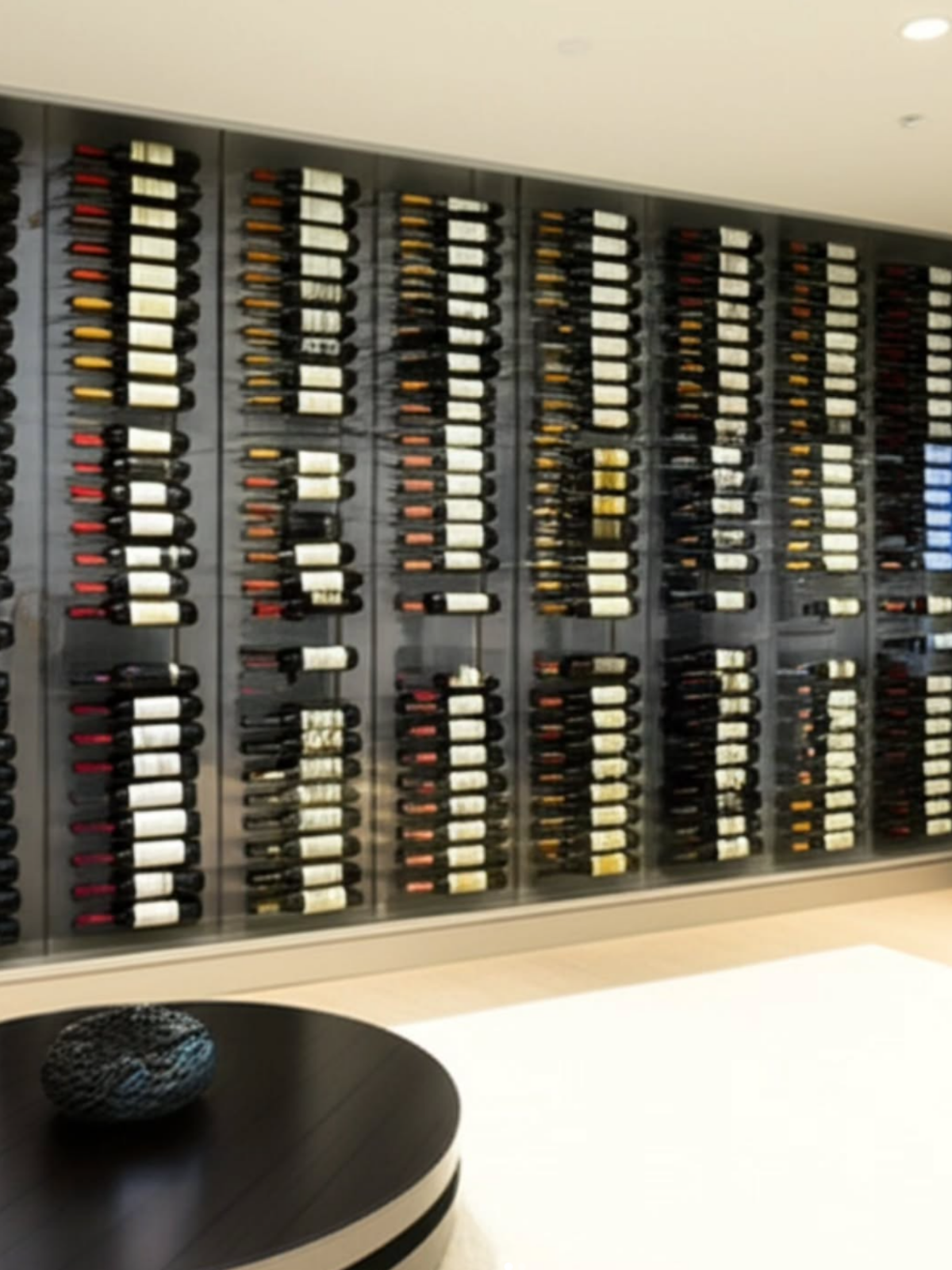
Wall-mounted wine racks are the most popular choice for Australian homes because they save floor space and create a striking visual display. Bottles sit horizontally on wall-fixed brackets or frames, accessible without opening any doors or drawers.
Best for: Kitchens, dining rooms, home bars, apartments, and open-plan living areas where floor space is limited.
Materials available: Timber (pine, oak), metal (black powder-coated steel, stainless steel, chrome), and combined timber-and-metal designs.
Key considerations:
- Wall type matters — brick walls require masonry anchors; plasterboard walls need stud-finding to ensure load-bearing capacity
- Capacity typically ranges from 6 to 60+ bottles
- Most wall-mounted wine racks in Australia come with all mounting hardware included
Popular variants: Wall-mounted wooden wine racks, wall-mounted metal wine racks, wall-mounted wine racks with glass holders, floating wine rack shelves.
Freestanding Wine Racks
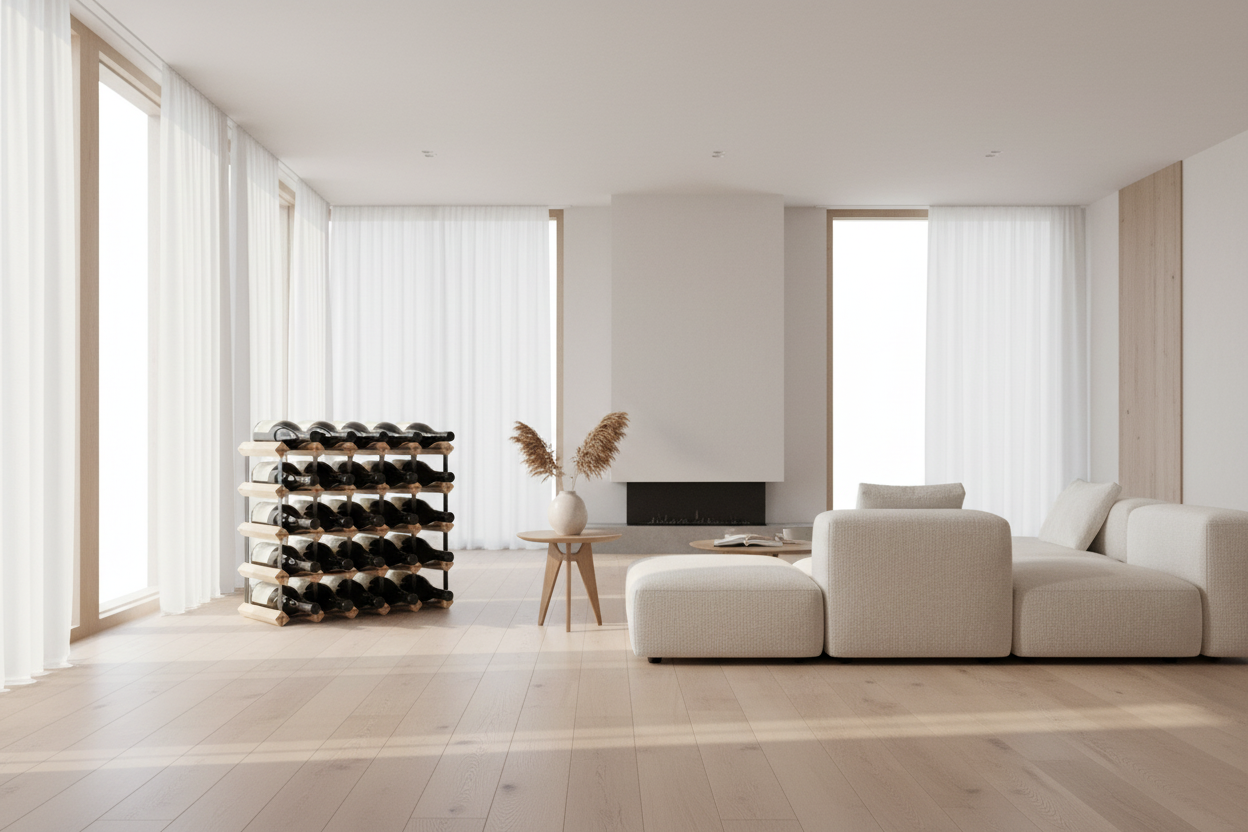
Freestanding or floor-standing wine racks sit independently and require no installation. They range from compact 6-bottle tabletop units to tall 200-bottle floor-to-ceiling towers.
Best for: Renters, those who want flexibility to rearrange, and buyers who need large-volume storage without construction.
Styles include:
- Tall wine racks — floor-standing towers, often 150–200 cm tall, holding 50–200+ bottles
- Slim wine racks — narrow vertical designs for tight spaces between appliances or furniture
- Corner wine racks — triangular or angled units that make use of dead corner space
- Vertical wine racks — stackable column designs that grow with your collection
Modular Wine Racks
Modular wine racks are the most flexible storage system available. Individual cube or column modules connect together, so you can start small and expand as your collection grows. This makes them the preferred choice for serious collectors and those fitting out dedicated cellar rooms.
Best for: Wine collectors, cellar rooms, large dining areas, and anyone who wants long-term expandability.
Materials: Usually timber (pine, oak) or metal. Some Australian brands offer modular systems in both finishes so you can mix and match.
Capacity: Start with a 12-bottle module and expand to 500+ bottles over time by adding more units.
Stackable Wine Racks
Stackable wine racks are a budget-friendly way to increase storage without committing to a fixed installation. Individual units (commonly 4–12 bottles) stack vertically and can be arranged in any configuration.
Best for: Those starting out, smaller budgets, renters, and people who move frequently.
Tabletop and Countertop Wine Racks
Compact designs that sit on a kitchen bench, dining table, or bar counter. Capacity typically ranges from 2 to 20 bottles.
Best for: Kitchen wine storage, entertaining surfaces, small apartments, or adding a decorative wine display to a bar counter.
Built-In Wine Racks
Custom-built or kitchen-integrated wine rack inserts that sit inside cabinetry, under stairs, in wall recesses, or as part of a home bar structure.
Best for: New builds, renovations, and premium home bar installations where seamless integration is the goal.
Cellar Wine Racks
Heavy-duty racking systems designed for dedicated wine rooms or cellars. Usually modular or custom-built, these hold hundreds to thousands of bottles, often with temperature control considerations in mind.
Best for: Serious collectors, commercial wine bars, restaurants, and anyone with a dedicated cellar space.
Wine Rack Materials: Timber vs Metal vs Other Options
Timber Wine Racks
Timber is the classic material for wine storage and remains the most popular choice in Australia. Pine is the most affordable option and widely available; oak and hardwood offer richer grain patterns and greater longevity.
Advantages of timber wine racks:
- Naturally beautiful grain that improves with age
- Warm aesthetic that suits both traditional and modern Australian interiors
- Lighter than solid metal
- Easy to customise with stain, paint, or natural wax finishes
Best timber types:
- Pine — affordable, readily available, light enough for wall mounting
- Oak — denser, richer appearance, excellent durability
- Mahogany — premium look, naturally resistant to humidity fluctuations
Maintenance: Occasional oiling or waxing keeps timber wine racks looking their best. Avoid prolonged exposure to direct sunlight, which can bleach the finish.
Metal Wine Racks
Metal wine racks — in steel, iron, stainless steel, or chrome — offer a contemporary, industrial aesthetic that suits modern and mid-century interiors.
Advantages of metal wine racks:
- Extremely durable and long-lasting
- Minimal visual profile — bottles appear to float
- Easy to clean
- Available in black powder-coated, brushed stainless, chrome, brass, and gold finishes
Types of metal wine racks in Australia:
- Black metal wine racks — most popular finish, suits contemporary and industrial interiors
- Stainless steel wine racks — hygiene-focused, suits kitchens and restaurant environments
- Chrome wine racks — bright, reflective finish for bar and entertainment spaces
- Brass or gold wine racks — premium, decorative look for luxury interiors
Maintenance: Wipe with a damp cloth. Powder-coated finishes are highly resistant to rust and chipping.
Combined Timber and Metal
Many contemporary wine racks combine both materials — a metal frame with timber shelving rails, or a timber cabinet with metal mesh inserts. This approach delivers the warmth of wood with the structural strength of steel and is increasingly popular for custom home bar builds.
How to Choose the Right Wine Rack for Your Home
Step 1: Determine Your Collection Size (and Future Growth)
A common mistake is buying a wine rack that fits your current collection but leaves no room to grow. As a guide:
- Occasional drinker or entertainer: 12–24 bottle capacity
- Regular buyer: 24–60 bottles
- Collector: 60–200+ bottles, or a modular system that expands
- Serious collector / cellar room: 200–2000+ bottles, bespoke racking required
Step 2: Measure Your Space
Before purchasing, measure width, height, and depth carefully. Key dimensions to check:
- Wall-mounted racks: Ensure sufficient wall height and stud/anchor points
- Freestanding racks: Measure floor space including clearance for opening doors
- Built-in racks: Measure the cabinet opening precisely; most modular inserts come in 300mm or 150mm width increments
Step 3: Choose the Right Material for Your Interior
| Interior Style | Recommended Material |
|---|---|
| Modern / contemporary | Black metal, stainless steel, combined timber-metal |
| Hamptons / coastal | White or natural timber, chrome accents |
| Industrial / loft | Black steel, raw metal, reclaimed timber |
| Traditional / classic | Oak, hardwood, stained pine |
| Minimalist | Floating metal wall rack, matte finishes |
| Rustic / country | Barrel-stave, rough-sawn timber |
Step 4: Consider Installation Requirements
Wall-mounted wine racks require installation. If you're not comfortable with power tools and wall anchors, factor in a handyman cost. Most freestanding and stackable racks require no installation at all.
Step 5: Set a Realistic Budget
Australian wine rack prices in 2025:
| Type | Price Range |
|---|---|
| Small tabletop / stackable (4–12 bottles) | $30 – $120 |
| Mid-size freestanding (20–50 bottles) | $120 – $400 |
| Wall-mounted timber or metal | $80 – $600 |
| Large modular system (50–200 bottles) | $400 – $2,000+ |
| Custom-built wine rack | $1,500 – $10,000+ |
Wine Rack Storage Tips
-
Always store bottles horizontally — this keeps the cork moist and prevents premature oxidation, regardless of whether you use a timber or metal rack.
-
Avoid direct sunlight — UV light degrades tannins and ages wine prematurely. Position racks away from windows or choose a cellar-style location.
-
Maintain consistent temperature — the ideal wine storage temperature is 12–14°C. Avoid areas near ovens, dishwashers, or external walls exposed to Australian summer heat.
-
Limit vibration — avoid storing wine racks near washing machines or high-traffic areas. Vibration disturbs sediment and can negatively affect ageing wines.
-
Store by drinking window — put wines you plan to drink soon at the front and accessible; wines for long-term ageing at the back or bottom.
-
Label or track your collection — even a simple spreadsheet noting bottle position, variety, vintage, and expected drinking date makes a significant difference as your collection grows.
Wine Storage Solutions for Small Spaces
Limited space is no barrier to a great wine collection. These solutions work well in Australian apartments, small kitchens, and compact dining rooms:
- Under-cabinet wine racks — mount beneath kitchen upper cabinets to utilise dead space
- Wall-mounted vertical racks — take up minimal floor space while displaying bottles attractively
- Slim freestanding racks — narrow profile designs (as little as 150mm deep) fit between appliances
- Stackable cube systems — start with 4 bottles and add units as needed
- Corner wine racks — use otherwise wasted corner space
Custom Wine Racks: When Off-the-Shelf Isn't Enough
For homeowners fitting out a dedicated wine room, a home bar, or a built-in wine display, custom wine racks offer design freedom that no standard product can match. A bespoke wine rack is built to:
- Fit your exact wall dimensions or cabinet opening
- Match your interior's timber species, stain, or metal finish
- Accommodate unusual bottle formats (magnums, champagne, half-bottles)
- Integrate with lighting, a wine fridge, or bar cabinetry
At HomeBars.com.au, our custom wine racks are designed and built in Australia using premium timber (pine, oak, mahogany) and high-quality steel hardware. Lead time is typically 6–12 weeks from design approval.
Frequently Asked Questions: Wine Racks Australia
What is the best wine rack for home use in Australia? The best home wine rack depends on your space, collection size, and style. For most Australian homes, a wall-mounted timber or metal wine rack holding 12–36 bottles offers the ideal balance of display, accessibility, and value. For growing collections, a modular system is the smarter long-term investment.
Are wall-mounted wine racks safe? Yes, when correctly installed into wall studs or with appropriate masonry anchors. Most wall-mounted wine racks sold in Australia include installation hardware and instructions. A properly mounted rack can safely hold 50–100+ kg, well in excess of most home collections.
What timber is best for a wine rack? Pine is the most affordable and widely available timber for wine racks in Australia. Oak is denser and more durable, with a richer appearance. Hardwood and mahogany are premium choices for custom builds. All are suitable — the choice comes down to budget and aesthetic.
How many bottles does a standard wine rack hold? Wine racks are available in virtually every capacity. Common sizes are 12, 20, 24, 40, and 72 bottles for freestanding and modular designs. Wall-mounted racks typically range from 6 to 60 bottles depending on dimensions.
Can I install a wine rack in a kitchen cabinet? Yes — modular inserts and pull-out wine rack inserts are designed specifically for kitchen cabinet integration. Measure the internal width and height of your cabinet opening and look for inserts in 300mm or 150mm width increments.
What is the difference between a wine rack and a wine cabinet? A wine rack holds bottles in open storage — visible and immediately accessible. A wine cabinet encloses the bottles behind doors, providing insulation from light and temperature fluctuations. Wine cabinets with refrigeration are called wine fridges. For long-term ageing, a cabinet or cellar environment is preferable; for everyday drinking and display, a rack is ideal.
Where can I buy wine racks in Australia? HomeBars.com.au offers one of Australia's largest ranges of wine racks online, including timber, metal, modular, wall-mounted, and custom-built options. Our Melbourne showroom at 15/428 Old Geelong Road, Hoppers Crossing VIC is open for in-person browsing. We deliver nationwide.
Do you offer custom wine racks in Adelaide, Sydney, and Perth? Yes. HomeBars.com.au designs and delivers custom wine racks across all Australian states and territories, including Melbourne, Sydney, Brisbane, Adelaide, and Perth. Contact us for a quote and design consultation.
Shop Wine Racks at HomeBars.com.au
HomeBars.com.au has been Australia's trusted home bar and wine storage specialist since 2014. Our Melbourne-based team offers:
- Australia's widest range of timber, metal, and modular wine racks
- Custom-built wine racks and cellar racking systems
- Nationwide delivery
- In-store showroom in Hoppers Crossing, Melbourne
- Expert advice by phone and email
📞 03 8360 3606 📧 info@homebars.com.au 📍 15/428 Old Geelong Rd, Hoppers Crossing VIC 3029
Browse all wine racks → Design a custom wine rack →
HomeBars.com.au — Australia's home bar furniture specialists. Proudly Australian-owned since 2014.


Leave a comment
This site is protected by hCaptcha and the hCaptcha Privacy Policy and Terms of Service apply.