


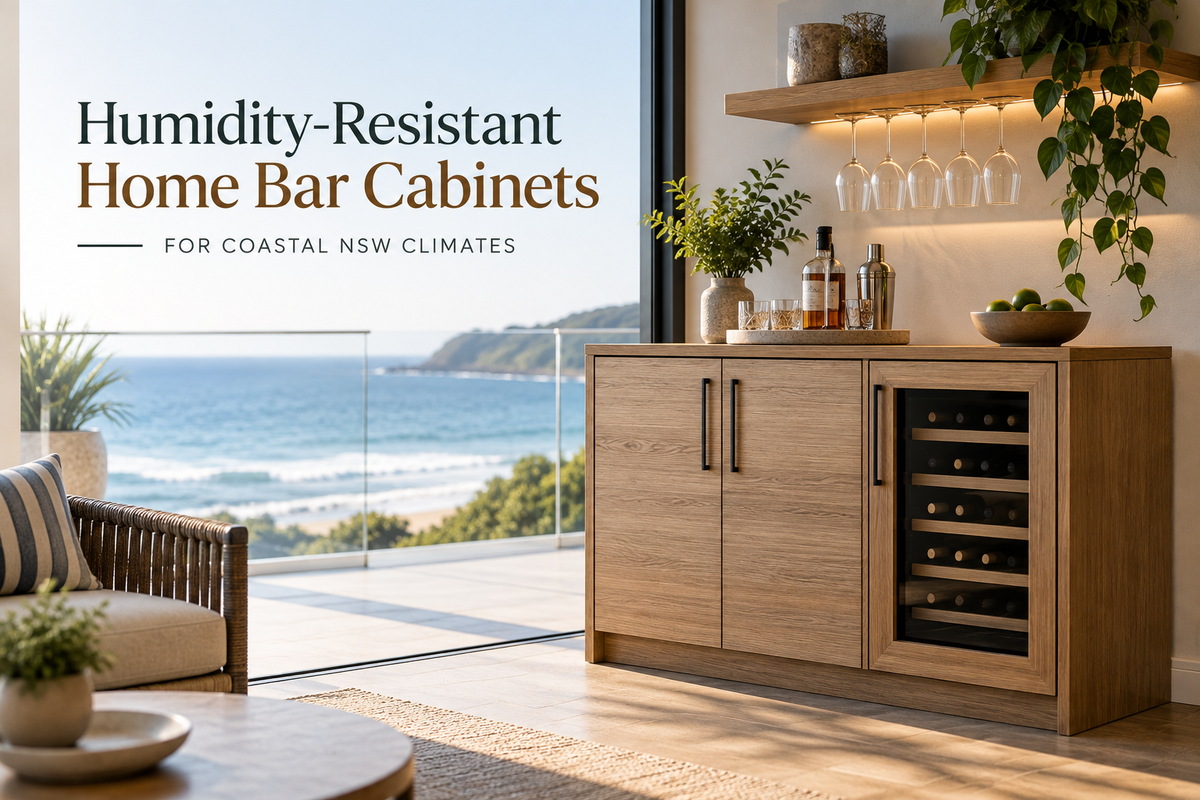
Living near the coast has plenty of advantages. From ocean views and fresh sea breezes to relaxed outdoor entertaining, coastal NSW offers an ideal environment for enjoying a drink with friends and family. However, coastal living also presents a unique challenge for furniture: humidity.
Moisture in the air can affect timber, metal hardware, finishes and other materials used in home bar furniture. A standard cabinet that performs well in a dry inland environment may require more maintenance in a humid coastal home. Choosing a humidity-resistant home bar cabinet is therefore an important consideration for homeowners in Sydney's coastal suburbs, the Central Coast, Newcastle, Wollongong, Byron Bay and other NSW coastal areas.
A well-designed cabinet should combine moisture-resistant materials, suitable finishes, good ventilation and practical storage. Here's what to consider when choosing a home bar cabinet for a coastal NSW climate.
Why Humidity Matters for Home Bar Cabinets
Humidity refers to the amount of moisture present in the air. Coastal locations can experience higher humidity because of their proximity to the ocean, particularly during warmer months.
Furniture materials respond to changes in humidity. Natural timber, for example, can absorb and release moisture depending on surrounding conditions. Over time, repeated exposure to moisture can contribute to swelling, movement, warping or changes in the appearance of the material.
Humidity can also affect other components of a home bar cabinet. Metal hinges, handles and brackets may be more susceptible to corrosion, while poorly protected surfaces can develop stains or deterioration.
This doesn't mean coastal homeowners need to avoid timber furniture. Instead, it highlights the importance of selecting materials and finishes designed to cope with the conditions.
Choose the Right Cabinet Materials
The material used to construct a bar cabinet is one of the most important factors to consider.
Solid timber can provide an attractive natural appearance and long-term durability when properly selected, constructed and finished. However, not all timber products perform identically in humid conditions.
Quality engineered boards with appropriate moisture-resistant construction can also be useful for certain cabinet components. The suitability depends on the product specifications, construction method and location of the cabinet.
For coastal homes, ask about:
- Moisture-resistant construction
- Quality cabinet-grade materials
- Protective surface finishes
- Sealed edges and joints
- Suitable hardware
- Manufacturer care recommendations
The goal is to choose a cabinet designed with its intended environment in mind rather than simply selecting a style based on appearance.
Consider Moisture-Resistant Timber Finishes
Timber can work beautifully in coastal interiors, but the finish plays an important role.
Protective coatings can help reduce direct moisture absorption and make surfaces easier to clean. Depending on the cabinet, finishes may include suitable lacquers, polyurethane coatings, oils or other protective treatments.
The finish should cover exposed surfaces consistently. Particular attention should be paid to edges, corners and joins because these areas can be more vulnerable to moisture.
If you are considering a custom home bar cabinet, discuss the intended location with the manufacturer or furniture maker. A cabinet designed specifically for a coastal NSW home can be specified with appropriate materials and finishes from the beginning.
Look for Quality Hardware
Hardware is often overlooked when choosing furniture, but it can be especially important in coastal environments.
Cabinet hinges, drawer runners, handles and other metal components can be exposed to humid air. Salt-laden coastal air can also contribute to corrosion over time.
Look for quality hardware with finishes or materials suitable for humid environments. Stainless steel and appropriately protected metal hardware may offer advantages depending on the application.
Pay attention to the small details. A beautiful cabinet can lose functionality if hinges become difficult to operate or hardware deteriorates prematurely.
Ventilation Is Important
Good ventilation can help reduce moisture accumulation inside a cabinet.
This is particularly important if you are storing wine, glassware, bar equipment or other items in an enclosed cabinet. Avoid completely sealing a cabinet in a location where moisture can become trapped.
Ventilation requirements will depend on the cabinet design and what you are storing. For cabinets containing electrical equipment or wine refrigeration systems, manufacturer ventilation requirements should always be followed.
A well-planned bar cabinet should allow the surrounding space to breathe while maintaining a clean and attractive appearance.
Avoid Placing Cabinets in High-Moisture Areas
Even a humidity-resistant cabinet should not be treated as waterproof furniture.
Location matters significantly. Avoid positioning your bar cabinet directly beside areas that regularly experience water exposure, such as an outdoor shower, uncovered balcony, sink splash zone or poorly ventilated bathroom.
If your home bar is located near an outdoor entertaining area, consider how rain, sea spray and condensation could reach the furniture.
A sheltered indoor location is generally easier to control and can help extend the life of the cabinet.
Coastal NSW Locations Require Different Considerations
"Coastal NSW" covers a large geographical area, and conditions can vary between locations.
In Sydney, a home bar cabinet in a high-rise apartment may experience different environmental conditions from furniture in an open-plan beachside home.
Central Coast properties may combine humid conditions with large indoor-outdoor entertaining areas. Newcastle and Wollongong homes can also benefit from carefully selected finishes and corrosion-resistant hardware.
Further north, locations such as Byron Bay and other Northern NSW coastal areas can experience warm, humid conditions for extended periods.
The specific location of the cabinet within the home matters just as much as the general climate.
Choose Cabinets with Raised or Protected Bases
The bottom of a cabinet can be particularly vulnerable if it sits directly on a damp surface.
A slightly raised base, appropriate furniture feet or a well-designed plinth can provide additional protection. It can also make cleaning underneath the cabinet easier.
This is especially useful in homes where the bar cabinet is positioned near tiled floors or areas that may occasionally become wet.
If you are choosing custom furniture, ask whether the base can be designed to suit the flooring and environment.
Think About Indoor-Outdoor Entertaining
Coastal NSW homes often blur the boundary between indoor and outdoor living. Large doors, balconies and entertaining areas can make it tempting to place a bar cabinet close to the outdoors.
This can create a convenient entertaining setup, but furniture positioned near open doors may experience greater exposure to humidity, condensation and salt air.
For semi-outdoor spaces, choose furniture specifically designed for that environment. A standard indoor cabinet should not automatically be assumed to be suitable for outdoor use.
For an indoor home bar near an outdoor entertaining zone, positioning the cabinet slightly away from direct exposure can provide a good balance between convenience and protection.
Storage Features to Look For
A coastal home bar cabinet should be practical as well as durable.
Consider your storage requirements before purchasing. You may need dedicated areas for:
- Wine bottles
- Spirits
- Wine glasses
- Cocktail glasses
- Bar tools
- Serving trays
- Napkins
- Bottle openers
- Cocktail ingredients
- Decorative accessories
Adjustable shelving can make the cabinet more versatile. Drawers can provide convenient storage for smaller accessories, while enclosed compartments can help keep glassware and equipment protected from dust.
A combination of open display shelving and enclosed storage can create an attractive balance.
Wine Storage Requires Extra Attention
If the primary purpose of your cabinet is wine storage, humidity is only one environmental factor to consider.
Wine is sensitive to temperature, light, vibration and storage conditions. A decorative wine cabinet may be ideal for short-term or display storage, but it may not provide the controlled environment required for long-term wine ageing.
If you have valuable wine, consider a dedicated wine fridge or professionally designed wine storage system.
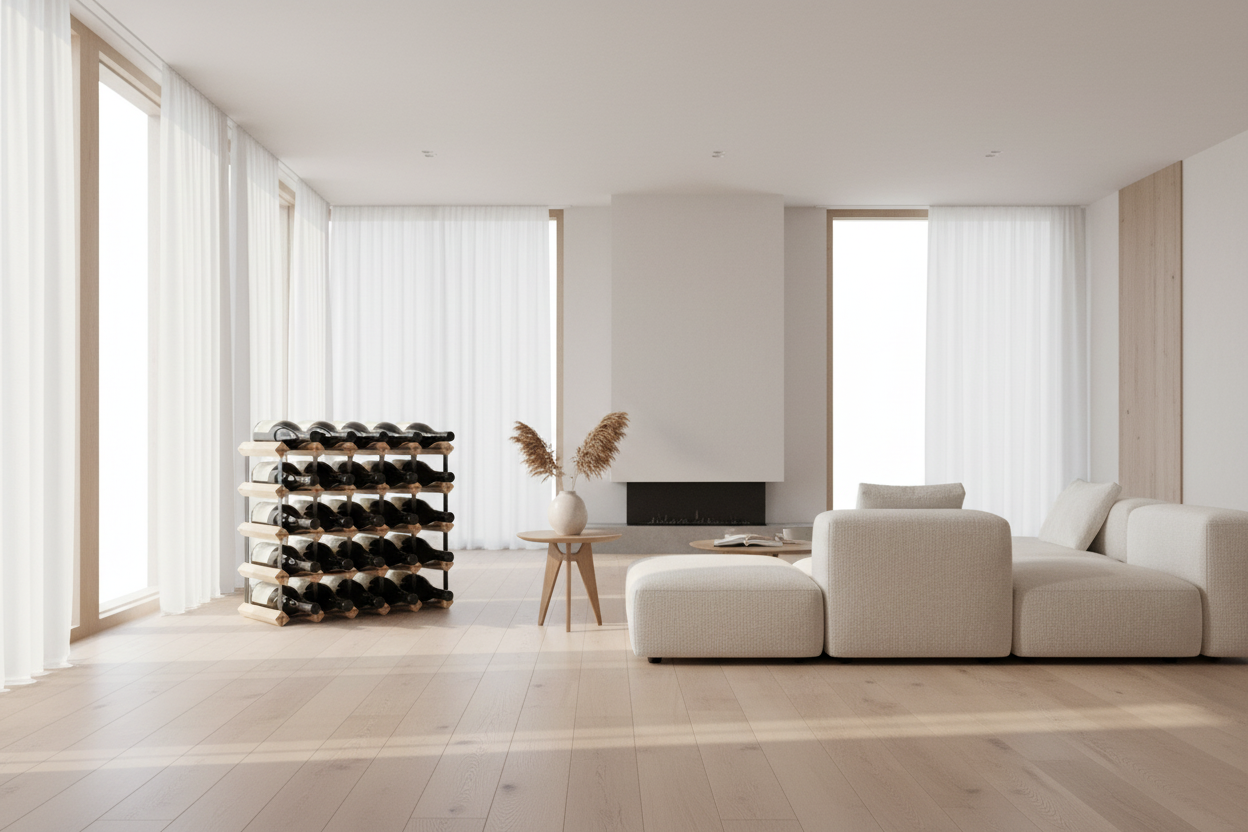
For everyday bottles, a stylish wine rack or bar cabinet can provide convenient storage while making your collection part of the interior design.
Match Coastal Style with Practicality
Humidity-resistant doesn't have to mean industrial or unattractive.
Coastal NSW interiors often use natural materials, light colours and relaxed textures. A timber bar cabinet can fit naturally into this aesthetic when paired with suitable protective finishes.
Popular design combinations include:
Light timber + white: Creates a bright coastal appearance.
Natural timber + stone: Adds warmth and a premium feel.
Timber + matte black hardware: Provides a modern coastal look.
Oak tones + neutral upholstery: Works well in relaxed entertaining spaces.
Dark timber + warm lighting: Creates a more sophisticated home bar atmosphere.
The right design allows the cabinet to become a feature rather than simply a storage unit.
Custom Cabinets for Coastal Homes
A custom home bar cabinet can be particularly useful when working with unusual spaces or demanding environmental conditions.
Custom furniture can be designed around your available wall space, storage requirements and interior style. Material selection and finishes can also be considered from the beginning.
For example, a coastal home might benefit from a cabinet with sealed timber surfaces, corrosion-resistant hardware, raised feet and carefully planned ventilation.
Customisation also allows homeowners to integrate the cabinet with existing furniture, flooring and architectural features.
How to Maintain a Home Bar Cabinet in Humid Conditions
Even a humidity-resistant cabinet requires basic care.
Keep the cabinet clean and dry, and wipe up spills quickly. Avoid leaving wet glasses or bottles directly on timber surfaces.
Maintain good airflow around the furniture rather than pushing it tightly against a damp wall.
Periodically inspect hinges, handles and other hardware for signs of corrosion or deterioration.
For timber cabinets, follow the manufacturer's recommendations for cleaning and refinishing. Avoid using harsh chemicals or excessive water unless the manufacturer specifically recommends them.
If your home experiences persistent condensation or unusually high indoor humidity, improving ventilation or using appropriate climate-control measures can benefit both furniture and the wider interior environment.
Common Mistakes to Avoid
There are several mistakes homeowners can make when choosing a bar cabinet for a coastal property.
Choosing Style Over Material
A cabinet may look perfect in a showroom but may not be suitable for your home's environment. Always consider construction and finish alongside appearance.
Ignoring Hardware
Low-quality hardware may deteriorate faster in humid or salt-air environments. Consider corrosion resistance when selecting handles, hinges and runners.
Placing Furniture Too Close to the Ocean Air
Open balconies and exposed entertaining areas can create challenging conditions for indoor furniture. Consider how much direct exposure the cabinet will receive.
Poor Ventilation
Trapped moisture can create problems over time. Make sure the cabinet and surrounding room have appropriate airflow.
Treating Humidity Resistance as Waterproofing
Humidity-resistant materials can improve durability, but they are not necessarily designed to withstand direct water exposure.
Creating a Coastal NSW Home Bar That Lasts
A successful coastal home bar should combine design, functionality and environmental suitability.
Start by choosing materials that can handle the conditions of your home. Then consider protective finishes, quality hardware, ventilation and cabinet placement. Finally, select a design that complements the relaxed character of coastal NSW interiors.
Whether you're furnishing a Sydney apartment, a Central Coast family home, a Newcastle property or a Northern NSW coastal retreat, a carefully selected home bar cabinet can provide years of practical storage and stylish entertaining space.
The best coastal bar designs don't simply look good. They are designed around the realities of coastal living.
Final Thoughts
Humidity-resistant home bar cabinets are a practical investment for coastal NSW homeowners who want attractive furniture without constantly worrying about moisture-related damage.
Natural timber, quality finishes, corrosion-resistant hardware, sensible placement and proper ventilation can all contribute to better long-term performance. With the right combination of materials and design, homeowners can create a stylish bar area that fits seamlessly into a coastal interior.
Whether you prefer a compact wall-mounted wine storage solution, a freestanding bar cabinet or a complete custom home bar, choosing furniture suited to the local environment is essential.
For coastal NSW homes, the ideal bar cabinet is one that combines durability, moisture-conscious construction, practical storage and timeless style creating an entertaining space that looks beautiful while being prepared for the unique conditions of life by the coast.

Leave a comment
This site is protected by hCaptcha and the hCaptcha Privacy Policy and Terms of Service apply.