


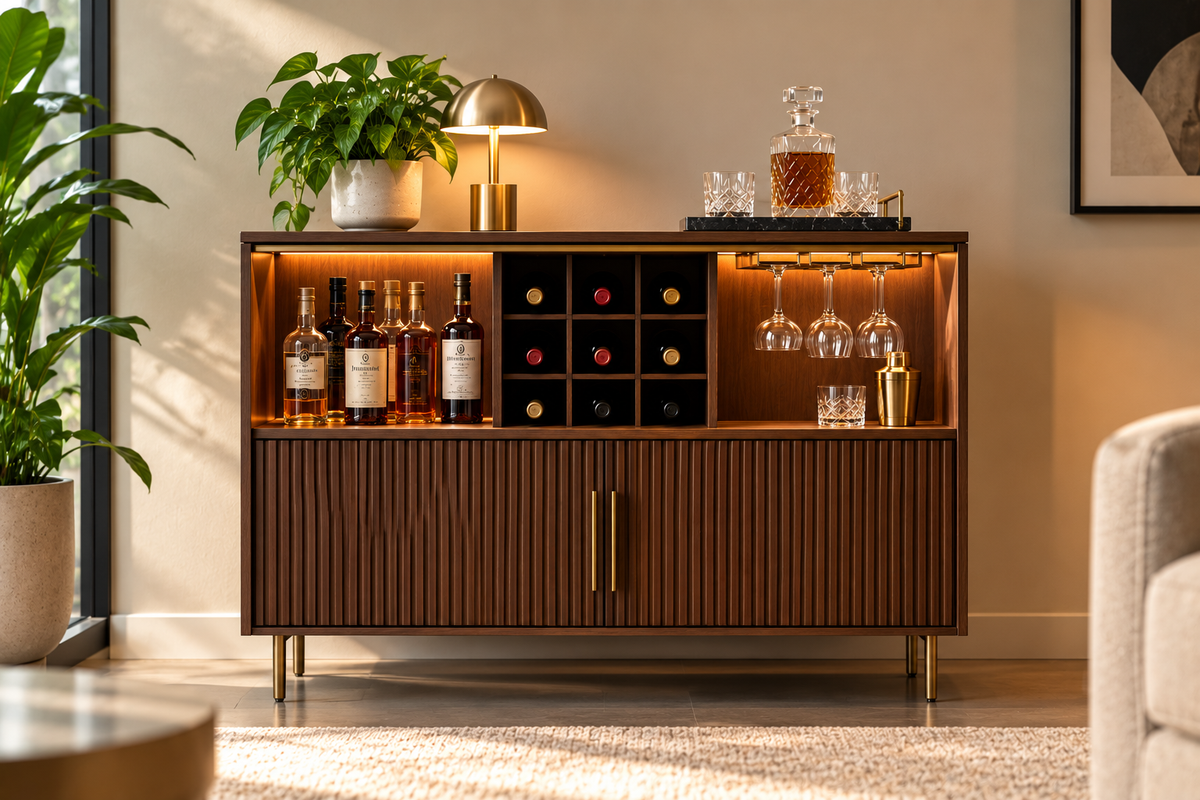
A well-designed bar cabinet can transform an ordinary living room, dining area or entertainment space into a stylish home bar. Beyond its appearance, a bar cabinet provides organised storage for bottles, glassware and accessories while creating a convenient place to entertain guests. Whether you prefer contemporary furniture, classic timber finishes or a minimalist design, the right planning can help you create a bar cabinet that complements your home.
If you are wondering how to design a bar cabinet, it is important to consider the available space, storage requirements, materials, lighting and overall interior style. This guide explores the essential steps to help you plan a practical and attractive home bar.
1. Choose the Right Location
The first step in designing a bar cabinet is selecting a suitable location. Popular options include living rooms, dining areas, entertainment rooms and spacious kitchens.
Measure the available floor space before choosing a bar cabinet design. Consider the surrounding furniture, doorways and walking paths to ensure the cabinet does not obstruct movement.
For smaller apartments, a compact cabinet or wall-mounted design can help maximise available space. Larger rooms may accommodate a freestanding cabinet with additional shelves and a wider countertop.
If you intend to use the cabinet frequently while entertaining, place it somewhere guests can access comfortably without disrupting other activities.
2. Determine the Size and Layout
The cabinet's dimensions should reflect both the available space and your storage needs.
Start by measuring the intended installation area. Consider the cabinet's height, width and depth, leaving sufficient clearance for doors, drawers and any pull-out or folding components.
Next, plan the internal layout. A practical bar cabinet may include:
-
Shelves for bottles and bar accessories.
-
Dedicated storage for tumblers and wine glasses.
-
Drawers for bottle openers, coasters and cocktail tools.
-
A countertop for arranging drinks.
-
Optional racks for stemware.
Arrange frequently used items in accessible compartments. Reserve lower shelves for heavier bottles and use upper shelves for lighter accessories.
A thoughtful layout improves usability and prevents the cabinet from becoming cluttered.
3. Select Materials That Match Your Interior
Material selection plays an important role in the cabinet's appearance, durability and maintenance requirements.
Solid wood: Oak, walnut and other suitable hardwoods can provide a timeless appearance and natural texture. Their final performance depends on construction quality and the finish applied.
Plywood: Quality plywood is a practical option for cabinet frames and panels. It can be finished with paint, veneer or suitable protective coatings.
Metal: Metal frames and hardware can introduce an industrial or contemporary aesthetic.
Glass: Glass doors and shelves can create a lighter visual appearance and display attractive glassware. Use glass designed for the intended application and load.
Choose materials that complement nearby furniture and suit your budget. Consider resistance to scratches, moisture and everyday wear when selecting finishes.
4. Decide on a Design Style
Your bar cabinet should complement the overall interior design rather than look disconnected from the room.
For a modern home, consider clean lines, handle-free doors and neutral finishes. Dark cabinetry paired with subtle metallic hardware can create a sophisticated appearance.
Traditional interiors often work well with detailed timber finishes, decorative handles and classic cabinet proportions.
For a minimalist space, choose simple shapes, concealed storage and a limited colour palette.
Rustic interiors can benefit from natural wood textures, darker metal accents and understated decorative details.
Before finalising the design, consider the colours and finishes of your existing furniture, flooring and wall decor.
5. Plan Practical Storage Features
A beautiful bar cabinet should also provide efficient storage.
Think about the items you intend to keep inside and allocate space accordingly. Bottle height, glass shape and accessory dimensions can influence shelf spacing.
Adjustable shelves offer flexibility if your storage needs change over time. Drawers are useful for small accessories, while dedicated glass holders can keep stemware organised.
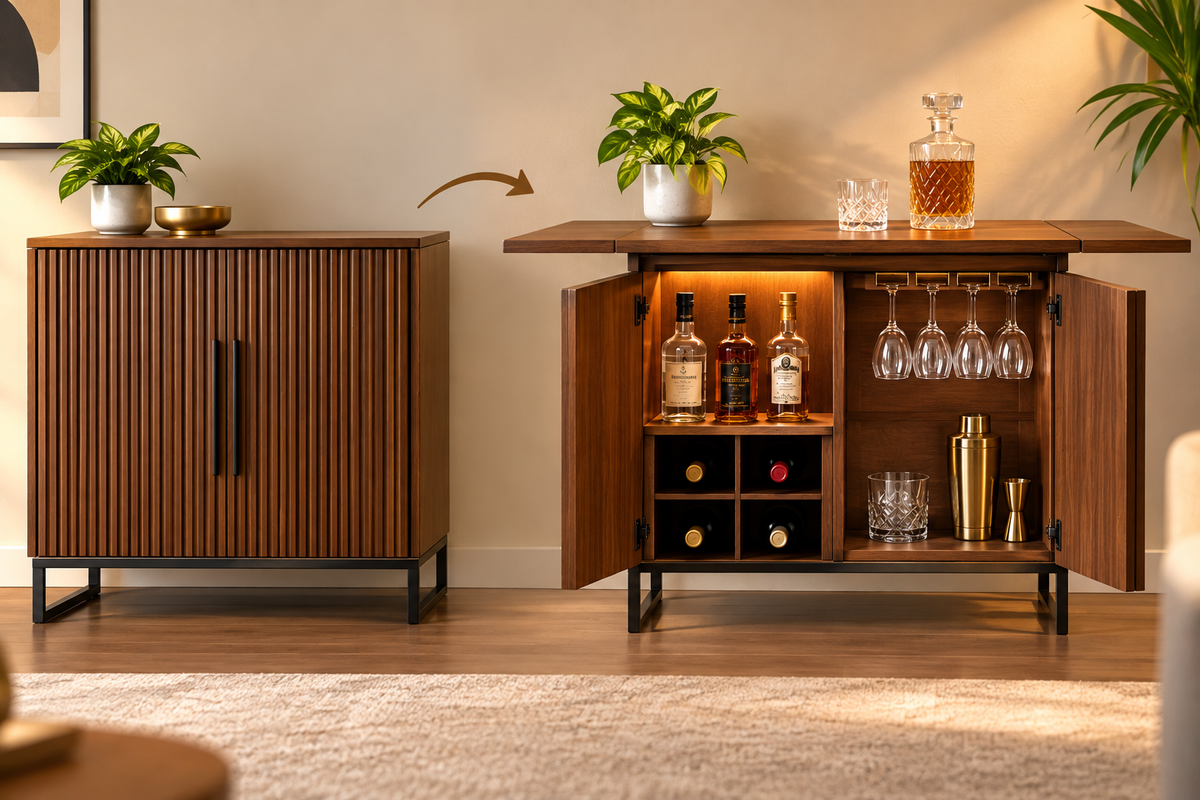
If you have limited space, consider a cabinet with folding panels or an extending countertop. These features can provide additional serving space without requiring a permanently larger footprint.
Avoid adding unnecessary compartments that reduce usable storage or complicate the cabinet's construction.
6. Incorporate Suitable Lighting
Lighting can highlight the cabinet's materials and create an inviting atmosphere.
Warm LED lighting inside shelves or behind glass doors can make glassware and decorative accessories stand out. Under-shelf lighting can also improve visibility when retrieving items.
For a more decorative approach, consider a nearby wall light or a small lamp on a sufficiently large countertop.
Keep lighting subtle and ensure any electrical components are suitable for the installation environment. Protect wiring from moisture and spills, and follow the manufacturer's installation instructions.
7. Design the Countertop and Hardware
The countertop should provide enough room for everyday use without making the cabinet unnecessarily bulky.
Consider durable surfaces that are easy to clean, such as properly finished timber or suitable stone-based materials. The best option depends on the cabinet design, budget and expected use.
Choose handles, hinges and drawer runners that complement the overall style. Hardware should be selected for the weight and dimensions of the components it supports.
For folding countertops, use appropriately rated support brackets and ensure the cabinet frame can safely carry the expected load.
Check that doors and drawers open smoothly and that the finished cabinet remains stable during use.
8. Add Finishing Touches
Once the main design is complete, consider how the cabinet will be styled.
A decorative tray can group accessories together, while neatly arranged glassware creates an organised display. A mirror or framed artwork above the cabinet can help establish a dedicated home bar area.
Keep decorations proportional to the cabinet's size. Smaller cabinets generally benefit from minimal accessories, while larger designs can accommodate more elaborate displays.
Leave sufficient countertop space for practical use and choose decorative elements that complement the surrounding interior.
Conclusion
Designing a bar cabinet requires a balance between appearance, storage and functionality. By selecting the right location, planning suitable dimensions, choosing durable materials and incorporating practical storage features, you can create a home bar that fits your lifestyle.
Pay attention to the cabinet's style, countertop, hardware and lighting to ensure every element works together. Whether you prefer a compact modern cabinet or a traditional timber design, thoughtful planning can turn your bar cabinet into an attractive and useful addition to your home.

Leave a comment
This site is protected by hCaptcha and the hCaptcha Privacy Policy and Terms of Service apply.