


Selecting the perfect bar stool isn't just about matching your interior style. it’s also about choosing the correct height. A bar stool that's too tall or too short can make dining, entertaining, or working at your kitchen island uncomfortable. Whether you're furnishing a modern kitchen, home bar, outdoor entertaining area, or commercial venue, understanding bar stool heights is essential.
This comprehensive guide explains everything Australian homeowners need to know about choosing the right bar stool height, including measuring tips, standard dimensions, different stool types, and common mistakes to avoid.
Why Bar Stool Height Matters
The right bar stool height directly impacts comfort, posture, and functionality. Proper spacing between the seat and the tabletop allows people to sit comfortably, eat, socialise, or work without feeling cramped.
Benefits of choosing the correct height include:
- Better seating comfort
- Improved posture
- Easier movement in and out of the stool
- Enhanced dining experience
- Better visual balance within your space
An incorrect height can make even the most stylish stool impractical.
Understanding Standard Counter Heights
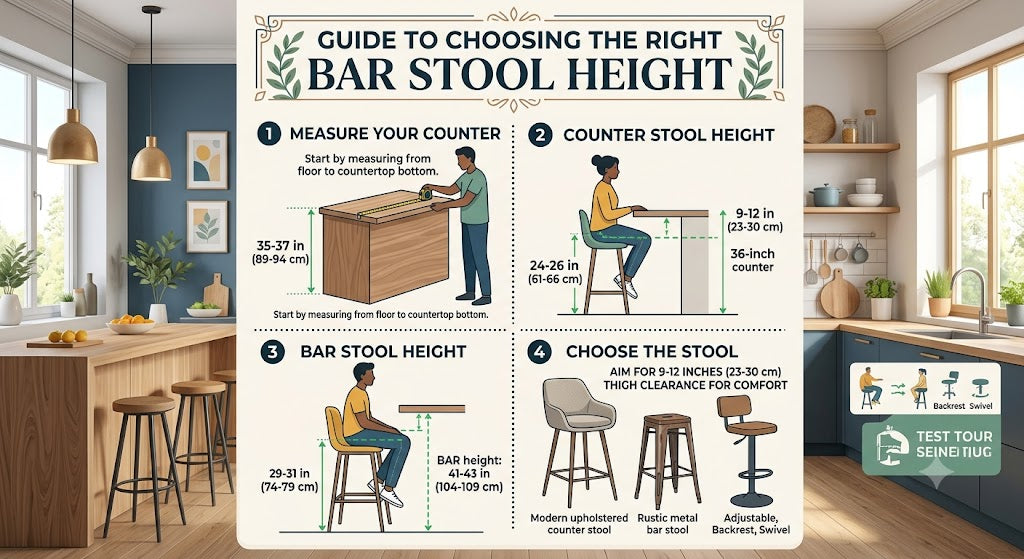
Before shopping for bar stools, measure the height of your counter or table.
In Australia, there are three common surface heights.
Kitchen Counter Height
Typical height:
90–95 cm
Recommended stool seat height:
60–66 cm
These are commonly known as counter stools and are perfect for kitchen islands where families gather for breakfast, coffee, or casual meals.
Bar Height
Typical height:
100–110 cm
Recommended stool seat height:
70–76 cm
These are traditional bar stools designed for home bars, entertainment areas, pubs, and restaurants.
Extra Tall Bar Tables
Typical height:
110–120 cm
Recommended stool height:
80–85 cm
These are less common in residential homes but are often found in commercial venues and outdoor entertaining spaces.
The Golden Rule
Always leave around:
25–30 cm between the stool seat and the underside of the countertop.
This provides enough legroom for comfortable seating.
For example:
Counter Height: 92 cm
Minus:
Seat Height: 65 cm
Remaining Space:
27 cm
Perfect.
How to Measure Correctly
Choosing the correct stool begins with accurate measurements.
Step 1: Measure Floor to Underside of Counter
Do not measure the top surface.
Measure from the floor to the bottom edge where your legs will fit.
Step 2: Subtract 25–30 cm
This determines the ideal seat height.
Example:
Counter underside:
93 cm
Minus:
28 cm
Ideal stool height:
65 cm
Step 3: Consider Leg Thickness
Some stone benchtops or timber counters have thicker edges.
If the countertop has a thick apron underneath, measure carefully to ensure sufficient legroom.
Counter Stools vs Bar Stools
Many people mistakenly use these terms interchangeably.
There is an important difference.
| Feature | Counter Stool | Bar Stool |
|---|---|---|
| Seat Height | 60–66 cm | 70–76 cm |
| Best For | Kitchen Islands | Home Bars |
| Counter Height | 90–95 cm | 100–110 cm |
| Everyday Dining | Excellent | Less Suitable |
Always match the stool to the actual bench height rather than relying solely on the product name.
Adjustable Height Bar Stools
Adjustable stools have become increasingly popular across Australian homes.
They feature a gas-lift mechanism that allows users to change the seat height.
Benefits include:
- Suitable for different counter heights
- Ideal for growing families
- Great for multi-purpose spaces
- Easy to customise for individual comfort
- Flexible for entertaining guests
They're especially useful if your kitchen island doubles as a dining space and work area.
Fixed Height Bar Stools
Fixed-height stools remain the most popular choice for permanent seating.
Advantages include:
- Stronger construction
- Better long-term durability
- Timeless appearance
- No moving mechanisms
- Often more affordable
If your bench height won't change, fixed stools are usually the better investment.
Don't Forget Seat Width
Height isn't everything.
Seat width affects overall comfort.
General recommendations:
- Small seat: 35–40 cm
- Standard seat: 40–45 cm
- Large seat: 45–50 cm
Larger seats provide better comfort for extended dining and entertaining.
Footrests Improve Comfort
A footrest is one of the most overlooked features.
Without one, users may experience:
- Dangling legs
- Lower back discomfort
- Reduced stability
- Leg fatigue
Quality bar stools should include a sturdy, well-positioned footrest.
Choosing the Right Number of Bar Stools
Avoid overcrowding.
Allow approximately:
55–65 cm between stool centres.
For wider stools, allow even more space.
Example:
Kitchen Island Width:
240 cm
Recommended:
3–4 stools
This gives everyone enough elbow room.
Backless, Low-Back or Full-Back?
Backless Stools
Best for:
- Small kitchens
- Compact apartments
- Minimalist interiors
Advantages:
- Save space
- Slide completely under counters
- Modern appearance
Low-Back Stools
Ideal for:
- Everyday kitchens
- Casual dining
Advantages:
- Moderate support
- Clean design
- Less visually bulky
Full-Back Bar Stools
Perfect for:
- Long meals
- Home bars
- Family gatherings
Advantages:
- Excellent lumbar support
- Premium comfort
- Luxurious appearance
Upholstered vs Hard Seats
Comfort also depends on the seat material.
Upholstered Seats
Best for:
- Long conversations
- Dining
- Home entertaining
Popular materials include:
- Leather
- Faux leather
- Fabric
- Velvet
Timber Seats
Advantages:
- Easy maintenance
- Natural appearance
- Durable
- Perfect for Scandinavian and coastal interiors
Metal Seats
Suitable for:
- Industrial interiors
- Outdoor spaces
- Commercial venues
Highly durable and easy to clean.
Kitchen Island Considerations
Kitchen islands are often used for:
- Breakfast
- Homework
- Remote work
- Coffee breaks
- Entertaining guests
Choose stools that prioritise comfort rather than appearance alone.
Look for:
- Comfortable cushioning
- Back support
- Stable footrests
- Durable upholstery
- Easy-clean surfaces
Matching Your Interior Style
Bar stools should complement your home's overall design.
Popular Australian styles include:
Coastal
- White timber
- Rattan
- Light oak
- Natural fabrics
Modern
- Black steel frames
- Leather upholstery
- Sleek silhouettes
Hamptons
- Upholstered seats
- White finishes
- Soft neutral colours
Industrial
- Metal frames
- Reclaimed timber
- Matte black finishes
Scandinavian
- Oak timber
- Minimalist design
- Soft grey upholstery
Common Mistakes to Avoid
Many homeowners purchase bar stools based purely on aesthetics.
Avoid these common errors:
Buying Before Measuring
Always measure first.
Ignoring Legroom
Too little space makes sitting uncomfortable.
Choosing Oversized Seats
Wide stools require more spacing.
Forgetting Footrests
A footrest significantly improves comfort.
Overcrowding
Leave enough room between stools for guests to move freely.
Mixing Heights
Unless intentionally designed, all stools around the same counter should have matching seat heights.
Outdoor Bar Stool Heights
Outdoor kitchens and entertaining areas are increasingly popular in Australia.
The same height rules apply.
However, choose weather-resistant materials such as:
- Powder-coated aluminium
- Polypropylene
- Synthetic wicker
- Teak
- Marine-grade stainless steel
Outdoor stools should also feature UV-resistant finishes to withstand Australia's climate.
Commercial Applications
For cafés, restaurants, pubs, and bars, durability becomes just as important as comfort.
Commercial bar stools should offer:
- Reinforced frames
- Scratch-resistant finishes
- Heavy-duty footrests
- Easy-clean upholstery
- Stable bases
Choosing the correct height reduces customer discomfort and improves the overall dining experience.
Quick Height Reference Guide
| Counter Height | Recommended Stool Height |
| 90 cm | 60 cm |
| 92 cm | 65 cm |
| 95 cm | 65 cm |
| 100 cm | 70 cm |
| 105 cm | 75 cm |
| 110 cm | 80 cm |
Always aim to maintain approximately 25–30 cm of clearance between the seat and the underside of the counter.
Final Thoughts
Choosing the right bar stool height is one of the most important decisions when furnishing your kitchen, home bar, or entertaining area. While colour, material, and design contribute to the overall look, the correct height ensures lasting comfort and functionality.
Start by measuring your countertop accurately, allow adequate legroom, and consider how the stools will be used every day. Whether you prefer a sleek adjustable stool for versatility or a classic fixed-height design for timeless appeal, selecting the right dimensions will enhance both comfort and style.
Investing in well-proportioned, high-quality bar stools not only improves your daily living experience but also creates a welcoming space where family and friends can gather comfortably for years to come.


Leave a comment
This site is protected by hCaptcha and the hCaptcha Privacy Policy and Terms of Service apply.