



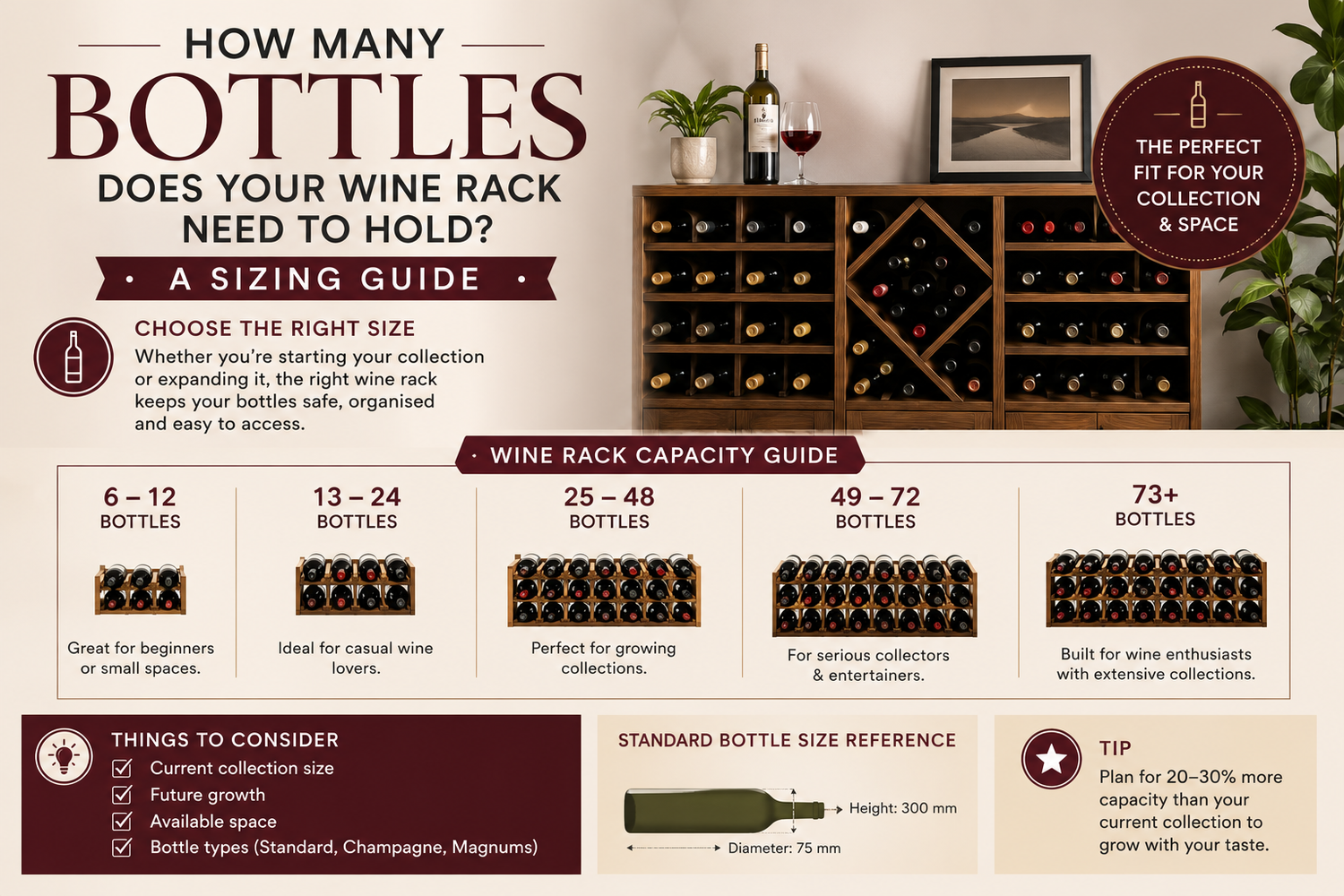
Choosing the perfect wine rack isn't just about finding a design that complements your home—it's also about selecting the right capacity. Buy a rack that's too small, and you'll quickly run out of storage space. Choose one that's too large, and it may take up valuable room while looking underutilised.
Whether you're a casual wine enthusiast, a weekend entertainer, or a dedicated collector, understanding how many bottles your wine rack should hold is essential. The ideal size depends on your lifestyle, wine-buying habits, available space, and future plans for your collection.
This guide will help Australian homeowners determine the right wine rack capacity by exploring common bottle sizes, storage needs, and practical considerations before making a purchase.
Why Wine Rack Size Matters
A wine rack is more than a storage solution it helps protect your wine while keeping your collection organised and easily accessible.
Choosing the right capacity offers several benefits:
- Prevents overcrowding
- Makes bottles easy to access
- Allows proper air circulation
- Keeps labels visible
- Maximises available space
- Supports future collection growth
Rather than buying for your current collection alone, it's wise to consider how your wine storage needs may evolve over time.
Start by Assessing Your Wine Collection
The first step in choosing a wine rack is knowing how many bottles you currently own.
Ask yourself:
- How many bottles do you usually keep at home?
- How often do you buy wine?
- Do you purchase individual bottles or full cases?
- Are you ageing wines or drinking them within weeks?
- Do you enjoy collecting premium vintages?
Your answers will help determine the storage capacity that's right for you.
Wine Rack Sizes Explained
Wine racks are generally categorised by the number of standard 750ml bottles they can hold.
Small Wine Racks (6–12 Bottles)
Best for:
- Beginners
- Apartment living
- Casual wine drinkers
- Small kitchens
Advantages include:
- Compact footprint
- Affordable pricing
- Easy placement
- Decorative appeal
If you typically purchase a few bottles at a time, a small wine rack is often sufficient.
Medium Wine Racks (12–24 Bottles)
Perfect for:
- Couples
- Regular entertainers
- Growing collections
Benefits include:
- Better organisation
- Extra storage flexibility
- Fits dining rooms and kitchens
- Leaves room for future purchases
This is one of Australia's most popular wine rack sizes because it balances capacity with space efficiency.
Large Wine Racks (24–50 Bottles)
Suitable for:
- Wine enthusiasts
- Frequent entertainers
- Home bar owners
Features often include:
- Multiple storage rows
- Premium timber construction
- Display shelves
- Decorative layouts
A larger rack provides room to organise wines by variety, region, or vintage.
Extra-Large Wine Racks (50+ Bottles)
Ideal for:
- Serious collectors
- Cellar storage
- Luxury homes
- Dedicated wine rooms
Large-capacity racks allow proper organisation while supporting long-term ageing.
Many modular systems can also expand as your collection grows.
Think About Your Buying Habits
Your purchasing style directly affects the size of wine rack you need.
Occasional Buyer
You typically buy:
- One or two bottles each month
Recommended capacity:
6–12 bottles
Weekend Wine Lover
You buy:
- Several bottles every fortnight
Recommended capacity:
12–24 bottles
Entertainer
You regularly host:
- Dinner parties
- BBQs
- Family gatherings
Recommended capacity:
24–36 bottles
Wine Collector
You purchase:
- Limited releases
- Cellar-worthy wines
- Mixed cases
Recommended capacity:
50 bottles or more
Allow Room for Growth
One of the biggest mistakes homeowners make is buying a wine rack that only fits their current collection.
A simple rule:
Buy a wine rack that's around 30–50% larger than your current bottle count.
For example:
| Current Collection | Recommended Rack |
|---|---|
| 8 bottles | 12 bottles |
| 15 bottles | 24 bottles |
| 30 bottles | 42–50 bottles |
| 45 bottles | 60+ bottles |
This provides flexibility without needing an immediate upgrade.
Consider Available Space
Your home's layout plays an important role in determining wine rack size.
Kitchen
Ideal for:
- Small racks
- Countertop storage
- Under-bench units
Recommended capacity:
6–18 bottles
Dining Room
Great for:
- Decorative racks
- Freestanding units
Recommended capacity:
12–36 bottles
Home Bar
Perfect for:
- Larger collections
- Entertaining
Recommended capacity:
24–60 bottles
Wine Cellar
Designed for:
- Long-term storage
- Premium collections
Recommended capacity:
100+ bottles
Bottle Shape Matters
Most wine racks are designed for standard Bordeaux bottles.
However, wine comes in different shapes.
Examples include:
- Bordeaux
- Burgundy
- Champagne
- Sparkling wine
- Riesling
- Pinot Noir
Larger bottles may reduce the rack's stated capacity.
If your collection contains many Champagne or Burgundy bottles, choose a rack with wider spacing.
Freestanding vs Wall-Mounted Wine Racks
Freestanding Wine Racks
Advantages:
- Larger capacity
- Expandable
- Easy relocation
- Suitable for growing collections
Available in:
- Timber
- Steel
- Mixed materials
Wall-Mounted Wine Racks
Ideal for:
- Small apartments
- Modern interiors
- Decorative displays
Capacity usually ranges between:
6–24 bottles
They're excellent for showcasing favourite wines while saving floor space.
Modular Wine Racks: A Future-Proof Solution
Modular wine racks have become increasingly popular because they grow with your collection.
Benefits include:
- Add sections later
- Flexible layouts
- Easier installation
- Custom configurations
- Better long-term value
Instead of replacing your wine rack, simply expand it.
Horizontal vs Vertical Storage
Bottle orientation also affects storage efficiency.
Horizontal Storage
Recommended for:
- Cork-sealed bottles
Benefits:
- Keeps cork moist
- Reduces oxidation
- Preserves wine quality
Vertical Storage
Suitable for:
- Screw-cap wines
- Short-term storage
Best for wines intended to be consumed within a few months.
Organising Your Wine Rack
A well-organised wine rack makes entertaining easier.
Popular organisation methods include:
By Colour
- Red
- White
- Rosé
- Sparkling
By Variety
- Shiraz
- Cabernet Sauvignon
- Pinot Noir
- Chardonnay
- Sauvignon Blanc
By Region
Separate Australian wines from imported selections.
Examples:
- Barossa Valley
- Margaret River
- Hunter Valley
- Yarra Valley
- France
- Italy
By Drinking Date
Store:
- Drink now
- Ageing
- Special occasions
This prevents older bottles from being forgotten.
Should You Store Full Cases?
Many wine lovers purchase full cases during sales.
One standard case contains:
12 bottles
If you regularly buy cases, ensure your wine rack can comfortably accommodate multiple cases without becoming overcrowded.
For example:
- Two cases = 24 bottles
- Three cases = 36 bottles
- Five cases = 60 bottles
Common Wine Rack Sizing Mistakes
Avoid these common errors:
Buying Too Small
The most frequent mistake.
Collections almost always grow over time.
Ignoring Bottle Shapes
Not every bottle fits standard rack openings.
Forgetting Entertaining Needs
Hosting guests often means keeping extra wine on hand.
Overlooking Available Space
Measure carefully before buying.
Allow room for doors, walkways, and furniture.
Prioritising Appearance Over Capacity
Choose a wine rack that balances style with practicality.
A beautiful rack should also meet your storage needs.
Maintenance Tips
Once you've selected the right wine rack:
- Keep it away from direct sunlight.
- Store bottles horizontally where appropriate.
- Avoid excessive humidity changes.
- Clean shelves regularly.
- Inspect for loose screws or joints.
- Keep the surrounding area well ventilated.
Proper maintenance helps both your wine and your furniture last longer.
Choosing the Right Capacity at a Glance
| Lifestyle | Recommended Capacity |
|---|---|
| Casual drinker | 6–12 bottles |
| Couple | 12–24 bottles |
| Regular entertainer | 24–36 bottles |
| Wine enthusiast | 36–60 bottles |
| Collector | 60–100+ bottles |
Conclusion
Choosing the right wine rack size is about more than simply counting bottles—it's about planning for your lifestyle, entertaining habits, and future collection. A thoughtfully sized wine rack keeps your wines organised, protected, and ready to enjoy while complementing your home's design.
For most Australian households, a 12 to 24-bottle wine rack offers the ideal balance between functionality and space efficiency. If you entertain regularly or enjoy collecting premium wines, investing in a larger or modular system can save money and provide flexibility as your collection grows.
By considering your current inventory, buying habits, available space, and bottle types, you'll be able to select a wine rack that not only meets your present needs but continues to serve you for years to come.



Leave a comment
This site is protected by hCaptcha and the hCaptcha Privacy Policy and Terms of Service apply.