



Australia is home to some of the world’s most respected wine-producing regions. From the bold Shiraz wines of Barossa Valley to the elegant Pinot Noir from Yarra Valley, each region carries its own identity, climate, and style. For wine enthusiasts who love collecting premium bottles, having a stylish wine rack or a modern bar cabinet is equally important for proper wine storage and home presentation.
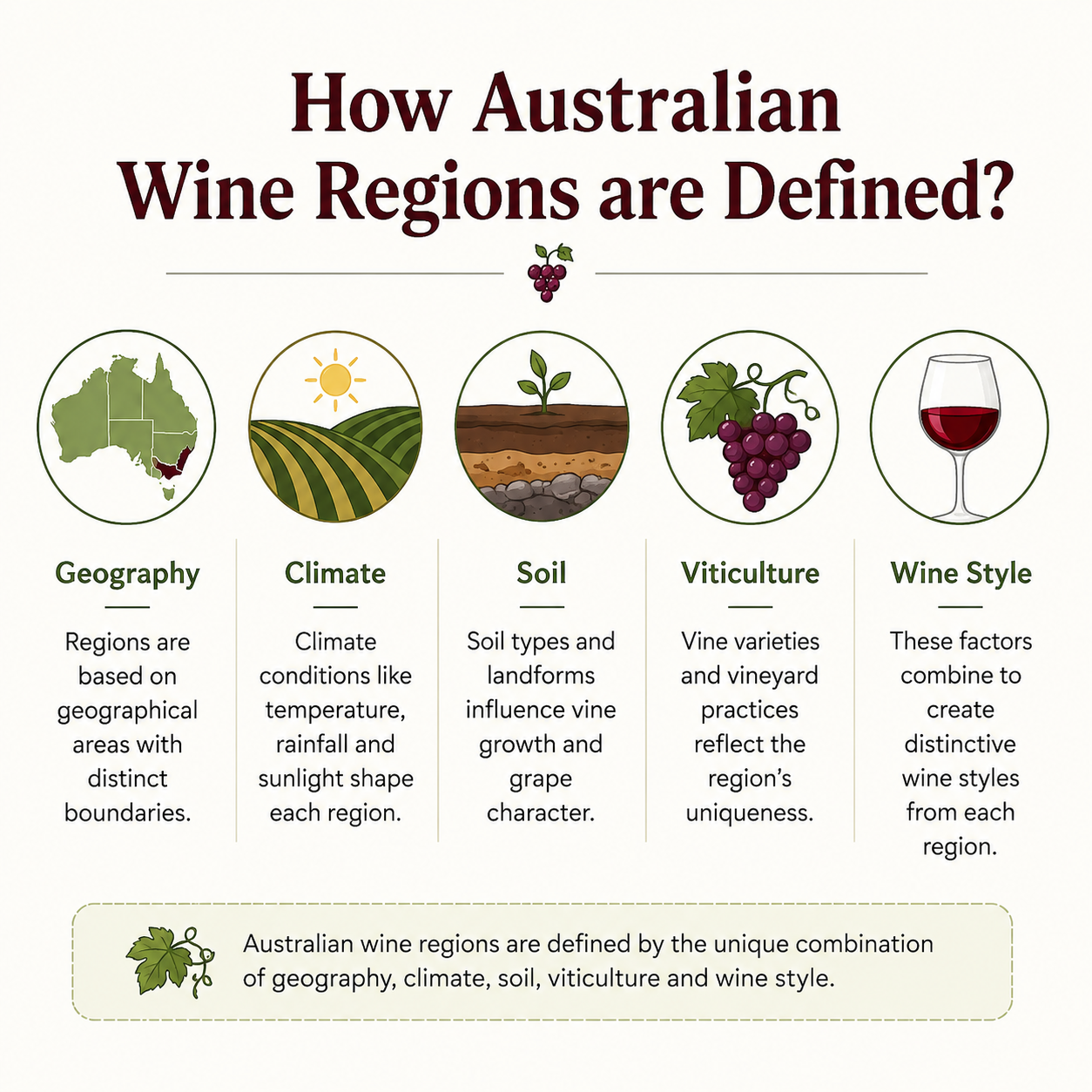
Wine regions in Australia are not named randomly. They are carefully classified based on geography, climate, history, and grape-growing conditions. This system helps wine producers maintain authenticity and allows consumers to understand where their wine comes from. The official system used in Australia is known as the Geographical Indication (GI) system.
Key Aspects of Australian Wine Regions
- Geographical Indications (GIs): These define the source of the grapes. The three-tier hierarchy includes Zones (e.g., Port Phillip), Regions (e.g., Yarra Valley), and Sub-regions (e.g., Piccadilly Valley).
- Definition Criteria: Regions must be a single tract of land, clearly distinct from neighboring areas in terms of climate (temperature, rainfall), soil types, and topography.
- Production Requirements: To be a defined region, the area must have at least 5 wineries and produce at least 500 tonnes of wine grapes annually.
- Role of Wine Australia: They maintain the Register of Protected GIs, ensuring that if a label lists a region, the wine must contain at least 85% of grapes from that area.
- Environmental Factors: Regions are characterized by their terroir, including maritime influences (coastal breeze), continental climates, and varied altitudes.
In this blog, we will explore how Australian wine regions are defined, the classification process, why it matters, and how different regions develop their unique wine personalities.
Understanding Australian Wine Regions
An Australian wine region is a specific geographical area where wine grapes are grown. These regions are identified based on environmental factors that influence grape quality and wine style.
The Australian wine industry uses the concept of “terroir,” a French term that refers to the natural environment affecting wine production. Terroir includes:
- Climate
- Soil type
- Rainfall
- Elevation
- Sunlight exposure
- Temperature
These elements combine to create distinctive wine characteristics in each region.
For example, cooler climates usually produce lighter and more acidic wines, while warmer climates create richer and fuller-bodied wines.
What is the Geographical Indication (GI) System?

Australia officially defines wine regions through the Geographical Indication (GI) system. This system was established in the 1990s to protect the authenticity of Australian wines and ensure accurate labeling.
A GI is a legally recognized wine-growing area. If a wine bottle states a particular region on its label, at least 85% of the grapes must come from that region.
This system is managed by Wine Australia, the country’s wine regulatory body.
The GI system works similarly to wine classifications in countries like:
- France (Appellation d’Origine Contrôlée)
- Italy (DOC and DOCG)
- Spain (DO system)
However, Australia’s approach is considered more flexible and modern.
The Hierarchy of Australian Wine Regions
Australian wine regions follow a hierarchical structure. These classifications help organize wine-growing areas from broad zones to smaller subregions.
1. Zone
A zone is the largest geographical classification. It may include multiple wine regions sharing similar climate conditions.
For example:
- South Eastern Australia
- Mount Lofty Ranges
- Big Rivers
Zones often cover large areas and are commonly used for blended wines.
2. Region
A region is more specific and has unique grape-growing characteristics. To qualify as a region, the area must:
- Be clearly defined geographically
- Produce wine grapes consistently
- Have distinctive environmental features
Some famous Australian wine regions include:
- Margaret River
- Hunter Valley
- Clare Valley
- Coonawarra
Each of these regions is known for specific wine varieties and production styles.
3. Subregion
Subregions are smaller areas within a larger wine region. They have even more specific terroir characteristics.
For example:
- Eden Valley is a subregion of Barossa
- Upper Hunter is part of Hunter Valley
Subregions allow winemakers to highlight highly specialized wine profiles.
Factors Used to Define Wine Regions
Several important factors determine whether an area can become an official Australian wine region.
Climate
Climate is one of the most important factors in wine production. Australian wine regions are generally classified into:
- Cool climate
- Moderate climate
- Warm climate
- Hot climate
Cool-climate regions like Tasmania produce sparkling wines and Pinot Noir, while warmer areas such as Riverland produce ripe and fruit-forward wines.
Temperature affects:
- Grape ripening
- Sugar levels
- Acidity
- Flavor development
Soil Composition
Soil plays a major role in vine health and wine flavor.
Different Australian regions have unique soil types:
- Terra rossa soil in Coonawarra
- Sandy soils in Swan Valley
- Volcanic soils in parts of Victoria
Well-drained soils are usually preferred because they force vines to grow deeper roots, improving grape quality.
Topography
Topography refers to the physical landscape, including:
- Elevation
- Hills
- Slopes
- Valleys
Higher-altitude vineyards tend to have cooler temperatures, which can improve grape acidity and aroma.
For example, regions with elevated vineyards often produce elegant Chardonnay and Pinot Noir wines.
Rainfall and Water Access
Australia is known for its dry climate, so rainfall and irrigation access are important.
Some regions depend heavily on irrigation from rivers, while others rely mainly on natural rainfall.
Balanced water availability helps produce healthy vines and consistent grape quality.
Historical Significance
An area’s wine-growing history also matters when defining regions.
Many Australian wine regions have decades or even centuries of winemaking heritage. Historical records help establish the legitimacy of a proposed GI region.
For example, McLaren Vale has a winemaking history dating back to the 1800s.
The Process of Registering a Wine Region
Creating an official wine region in Australia involves a formal application process.
Step 1: Application Submission
A group or organization submits an application to Wine Australia requesting GI recognition.
The application must include:
- Maps and boundaries
- Climate data
- Soil information
- Historical evidence
- Distinctive regional characteristics
Step 2: Public Review
The proposal is reviewed publicly. Interested parties can support or oppose the application.
This ensures fairness and transparency.
Step 3: Evaluation
Wine Australia evaluates whether the proposed area truly has unique characteristics that separate it from neighboring regions.
Experts analyze environmental and historical evidence carefully.
Step 4: Registration
If approved, the area becomes an official GI wine region.
Winemakers can then legally use the regional name on wine labels.
Why Wine Region Definitions Matter
Defining wine regions is important for several reasons.
Consumer Trust
Wine labels help consumers understand what they are buying.
If a bottle says “Barossa Valley Shiraz,” buyers expect grapes from that region.
The GI system protects consumers from misleading labels.
Brand Identity
Regional identity helps wineries market their wines more effectively.
Some Australian regions have become globally recognized brands because of their reputation for quality.
For example:
- Barossa Valley for Shiraz
- Margaret River for Cabernet Sauvignon
- Tasmania for sparkling wines
Quality Assurance
Defined regions encourage consistent standards and production quality.
When a region becomes known for premium wines, producers work hard to maintain that reputation.
International Trade Protection
GI protection also helps Australia in global wine trade agreements.
It prevents foreign producers from misusing Australian regional names.
This legal protection is especially important in export markets.
Major Australian Wine Regions and Their Characteristics
Australia has more than 65 designated wine regions. Here are some of the most famous ones.
Barossa Valley
Barossa Valley is one of Australia’s most iconic wine regions.
Known For:
- Shiraz
- Grenache
- Cabernet Sauvignon
Climate:
Warm and dry
Wine Style:
Rich, bold, full-bodied red wines with strong fruit flavors.
Margaret River
Margaret River is internationally respected for premium-quality wines.
Known For:
- Cabernet Sauvignon
- Chardonnay
Climate:
Mediterranean climate with ocean influence
Wine Style:
Elegant wines with balanced acidity and refined structure.
Hunter Valley
Hunter Valley is one of Australia’s oldest wine regions.
Known For:
- Semillon
- Shiraz
Climate:
Warm and humid
Wine Style:
Unique aged Semillon wines with citrus and honey notes.
Yarra Valley
Yarra Valley is famous for cool-climate wines.
Known For:
- Pinot Noir
- Chardonnay
- Sparkling wine
Climate:
Cool climate
Wine Style:
Elegant, aromatic, and refined wines.
Coonawarra
Coonawarra is famous for its terra rossa soil.
Known For:
- Cabernet Sauvignon
Climate:
Cool maritime climate
Wine Style:
Structured wines with strong aging potential.
Cool Climate vs Warm Climate Regions
Australian wine regions are often grouped into cool or warm climate categories.
Cool Climate Regions
Examples:
- Tasmania
- Yarra Valley
- Adelaide Hills
Characteristics:
- Higher acidity
- Lower alcohol
- Delicate flavors
- Better sparkling wines
Warm Climate Regions
Examples:
- Riverland
- Barossa Valley
- Swan Valley
Characteristics:
- Fuller body
- Higher alcohol
- Ripe fruit flavors
- Softer acidity
Both styles are important to Australia’s diverse wine industry.
Challenges Facing Australian Wine Regions
Australian wine regions also face modern challenges.
Climate Change
Rising temperatures can affect grape quality and harvest timing.
Some regions are experiencing:
- Earlier harvests
- Water shortages
- Heat damage
Winemakers are adapting with new grape varieties and vineyard techniques.
Water Management
Water availability is critical, especially in inland regions.
Efficient irrigation systems are becoming increasingly important for sustainability.
Market Competition
Australian wines compete globally with wines from:
- France
- Italy
- Chile
- United States
Strong regional branding helps Australian wines stand out internationally.
The Future of Australian Wine Regions
Australia’s wine industry continues to evolve.
New and emerging wine regions are gaining attention due to changing climate conditions and innovative winemaking practices.
Younger winemakers are experimenting with:
- Alternative grape varieties
- Organic farming
- Sustainable production
- Minimal-intervention wines
As consumer interest grows in regional authenticity, clearly defined wine regions will remain essential to the industry’s future.
Conclusion
Australian wine regions are carefully defined through the Geographical Indication system, which protects authenticity, quality, and regional identity. Climate, soil, topography, and historical significance all play major roles in determining official wine regions.
From the bold reds of Barossa Valley to the elegant cool-climate wines of Yarra Valley, each region offers unique characteristics shaped by nature and tradition.
Understanding how these regions are defined helps wine lovers appreciate the diversity and complexity of Australian wines. It also strengthens consumer trust and supports Australia’s global reputation as one of the world’s leading wine-producing nations.



Leave a comment
This site is protected by hCaptcha and the hCaptcha Privacy Policy and Terms of Service apply.