


Choosing the right stool for your kitchen, dining area, or home bar may seem simple at first, but many people end up buying the wrong size. A stool that is too tall or too short can make sitting uncomfortable and completely affect the look of your space. That is why understanding the difference between bar stools and counter stools is important before making a purchase.
While both types of stools may look similar, the main difference lies in their height and intended use. Whether you are designing a modern kitchen island, creating a breakfast corner, or setting up a stylish home bar, selecting the proper stool height can improve both comfort and aesthetics.
In this detailed height guide, we will explain the difference between bar stools and counter stools, how to measure correctly, ideal dimensions, styling tips, and how to choose the perfect stool for your home.
Understanding the Difference Between Bar Stools and Counter Stools
The terms “bar stool” and “counter stool” are often used interchangeably, but they are designed for different surface heights.
Counter Stools
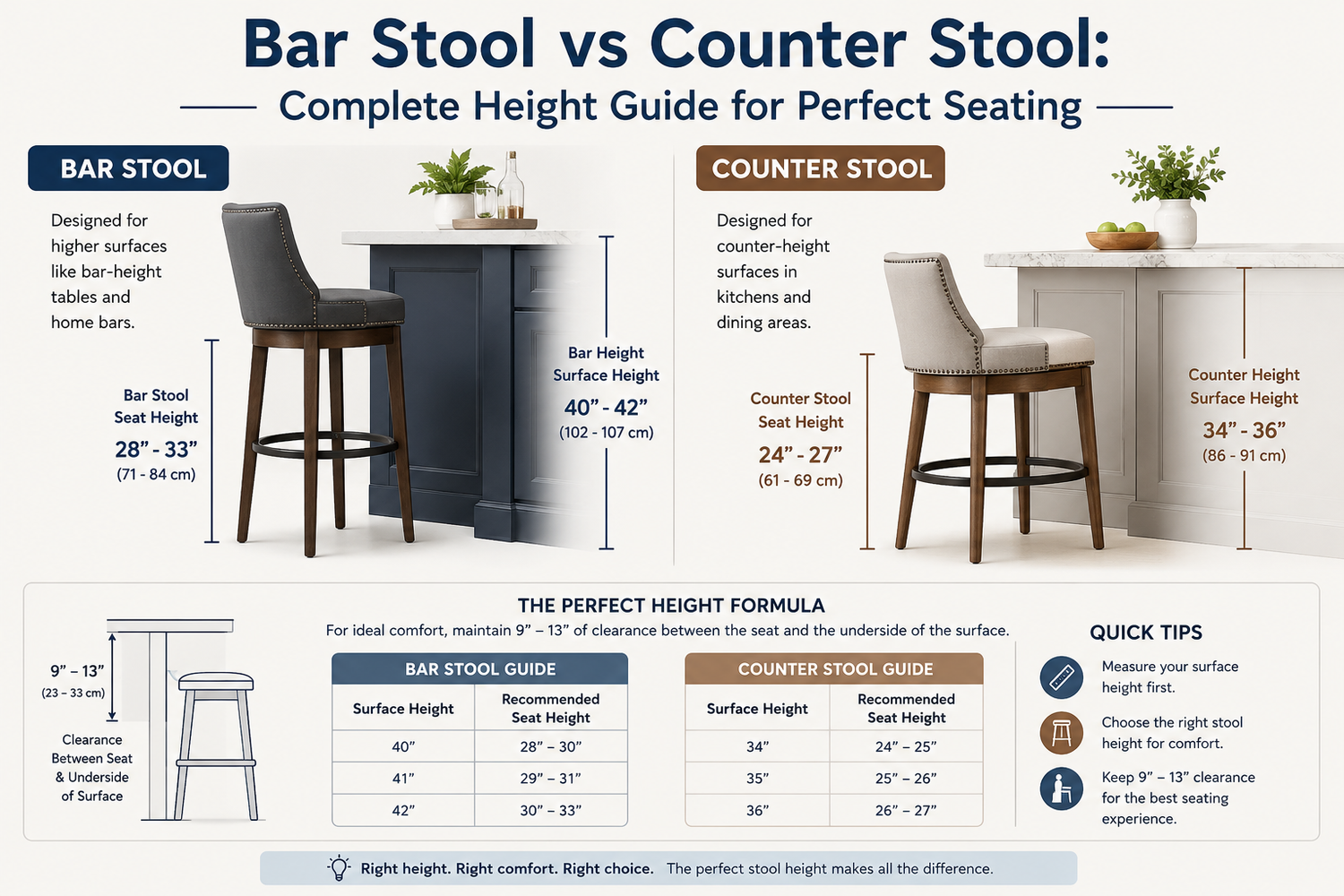
Counter stools are shorter and are made for kitchen counters, breakfast islands, and worktops that are generally around 34 to 36 inches high.
The standard seat height for counter stools is:
- 24 to 27 inches from the floor
These stools allow enough legroom for comfortable seating at a kitchen counter without feeling too high.
Bar Stools

Bar stools are taller and are designed for bar-height tables or home bars that are usually 40 to 42 inches high.
The standard seat height for bar stools is:
- 28 to 33 inches from the floor
These stools create a more elevated seating experience and are commonly found in pubs, entertainment rooms, and high bar counters.
Why Stool Height Matters
Buying the correct stool height is not only about appearance. It directly affects comfort, posture, and usability.
If the stool is too low:
- Your knees will sit too high
- Eating and working become uncomfortable
- The furniture may look disproportionate
If the stool is too high:
- Legs may not fit comfortably under the counter
- Sitting for long periods becomes difficult
- The space may feel cramped
The ideal spacing between the seat and the underside of the counter should be around 9 to 12 inches for comfortable legroom.
Standard Stool Height Guide
Here is a simple stool sizing chart to help you choose the correct option.
| Counter/Table Height | Recommended Stool Type | Seat Height |
|---|---|---|
| 28–30 inches | Dining Stool | 18–23 inches |
| 34–36 inches | Counter Stool | 24–27 inches |
| 40–42 inches | Bar Stool | 28–33 inches |
| 44–47 inches | Extra Tall Bar Stool | 34–40 inches |
This guide works well for most homes, kitchens, and entertainment spaces.
How to Measure for the Right Stool
Before purchasing stools, always measure carefully rather than guessing based on appearance.
Step 1: Measure Counter Height
Measure from the floor to the underside of the countertop or bar surface.
Step 2: Subtract Legroom Space
Subtract approximately 10 inches to determine the ideal seat height.
For example:
- Counter height: 36 inches
- Recommended stool seat height: 26 inches
Step 3: Check Width Spacing
Allow enough room between stools so people can sit comfortably.
Recommended spacing:
- 6 inches between stools
- 24 to 30 inches per person
This prevents overcrowding and improves movement around the seating area.
Counter Stools: Best Uses
Counter stools are one of the most popular seating choices in modern homes because kitchen islands have become central gathering spaces.
Ideal Places for Counter Stools
- Kitchen islands
- Breakfast counters
- Open-plan kitchens
- Coffee corners
- Casual dining spaces
Counter stools provide a relaxed and functional seating arrangement for daily activities like eating, working, or socializing.
Popular Counter Stool Styles
Backless Counter Stools
Perfect for small spaces because they slide neatly under the counter.
Swivel Counter Stools
Allow easy movement and improve convenience.
Upholstered Counter Stools
Offer extra comfort and a luxurious appearance.
Wooden Counter Stools
Create a warm and timeless interior style.
Bar Stools: Best Uses
Bar stools are taller and create a more elevated, entertainment-focused atmosphere.
Ideal Places for Bar Stools
- Home bars
- Entertainment rooms
- Pub-style counters
- High-top dining tables
- Outdoor bar setups
Bar stools often become statement furniture pieces because of their height and visual presence.
Popular Bar Stool Styles
Industrial Bar Stools
Feature metal frames and rustic finishes.
Modern Bar Stools
Include sleek lines, leather upholstery, and minimalist designs.
Adjustable Bar Stools
Allow height customization for flexible use.
Bar Stools with Footrests
Provide better support and comfort during long sitting periods.
Counter Stool vs Bar Stool: Key Differences
| Feature | Counter Stool | Bar Stool |
|---|---|---|
| Seat Height | 24–27 inches | 28–33 inches |
| Counter Height | 34–36 inches | 40–42 inches |
| Best For | Kitchen islands | Home bars |
| Appearance | Casual | Elevated |
| Comfort Level | Everyday seating | Entertainment seating |
Understanding these differences helps prevent costly furniture mistakes.
Choosing the Right Style for Your Home
Height matters, but style also plays an important role in your overall interior design.
For Modern Kitchens
Choose minimalist counter stools with neutral colors and clean lines.
For Rustic Interiors
Wooden stools with textured finishes work beautifully.
For Luxury Spaces
Velvet or leather upholstered stools create an elegant atmosphere.
For Small Apartments
Backless stools save space and reduce visual clutter.
For Family Homes
Choose sturdy stools with supportive backs and easy-to-clean materials.
Material Options to Consider
The material of your stool affects durability, maintenance, and style.
Wood
- Warm and timeless
- Durable
- Great for traditional and farmhouse interiors
Metal
- Industrial and modern look
- Strong and long-lasting
- Easy to maintain
Upholstered Fabric
- Comfortable seating
- Stylish appearance
- Requires more cleaning care
Leather or Faux Leather
- Sophisticated look
- Easy to wipe clean
- Popular in modern homes
Should You Choose Adjustable Stools?
Adjustable stools are becoming increasingly popular because they offer flexibility.
Benefits of Adjustable Stools
- Work with multiple counter heights
- Great for growing families
- Easy customization
- Modern appearance
However, fixed-height stools are often sturdier and may last longer in high-use areas.
Common Mistakes People Make When Buying Stools
Avoiding these mistakes can save money and improve comfort.
Ignoring Measurements
Many people choose stools based only on appearance.
Buying Oversized Stools
Large stools may overcrowd the counter area.
Forgetting Legroom
Too little space between seat and counter creates discomfort.
Ignoring Footrests
Footrests improve posture and sitting comfort significantly.
Choosing Style Over Comfort
Beautiful stools are useless if they are uncomfortable for daily use.
How Many Stools Should You Buy?
The number of stools depends on your counter width.
General Rule
Allow:
- 24–30 inches of width per stool
Example:
- A 6-foot counter can usually fit 3 stools comfortably.
Spacing is important for both aesthetics and functionality.
Best Stool Height for Kitchen Islands
Most kitchen islands are counter height, which means counter stools are usually the correct choice.
For standard kitchen islands:
- Counter height: 36 inches
- Ideal stool height: 24–26 inches
If your kitchen island is custom-built, always measure before ordering furniture.
Are Bar Stools Comfortable for Daily Use?
Bar stools can absolutely be comfortable if chosen carefully.
Look for features like:
- Cushioned seats
- Back support
- Footrests
- Swivel functionality
However, counter stools are generally better suited for everyday dining and family use because they are easier to get on and off.
Final Thoughts
Choosing between a bar stool and a counter stool mainly comes down to height, comfort, and how you plan to use the space. Counter stools are perfect for kitchen islands and everyday seating, while bar stools work best for entertainment areas and elevated counters.
Before buying, always measure your counter height carefully and leave enough legroom for comfortable seating. Consider your home’s style, available space, and how frequently the stools will be used.
The right stool can completely transform your kitchen or bar area, adding both functionality and visual appeal. Whether you prefer modern metal designs, cozy upholstered seating, or rustic wooden stools, selecting the correct height ensures your furniture looks great and feels comfortable every day.
FAQs
1. What is the main difference between a bar stool and a counter stool?
The main difference is height. Counter stools usually have a seat height of 24–27 inches, while bar stools are taller at 28–33 inches.
2. How do I measure the correct stool height?
Measure the height of your counter or bar and subtract around 10 inches. This gives enough legroom for comfortable seating.
3. Can I use bar stools at a kitchen counter?
Bar stools are usually too tall for standard kitchen counters. Most kitchen counters work best with counter-height stools.
4. What is the ideal spacing between stools?
Leave around 6 inches between stools and allow 24–30 inches of counter space per person for comfortable seating.
5. Are adjustable stools a good option?
Yes, adjustable stools are flexible and work well in spaces with varying counter heights, making them practical for modern homes.

Leave a comment
This site is protected by hCaptcha and the hCaptcha Privacy Policy and Terms of Service apply.